

What's Happening?
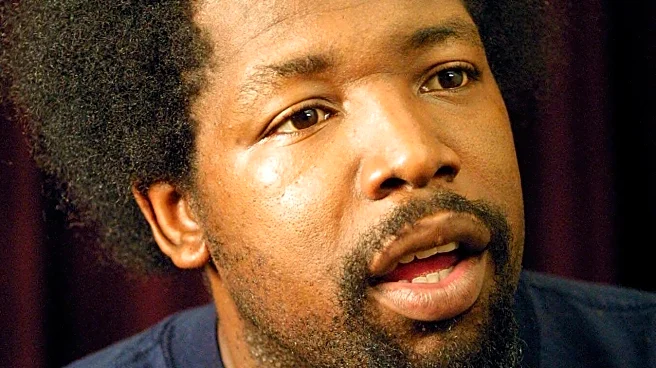
Afroman, a rapper known for his early 2000s hits, has won a defamation lawsuit filed by seven law enforcement officers from the Adams County Sheriff's Office in Ohio. The lawsuit stemmed from Afroman's use of footage from a 2022 police raid on his home
in his music videos and social media posts. The raid, conducted on suspicion of drug trafficking and kidnapping, did not result in any charges against Afroman, whose real name is Joseph Foreman. The officers claimed that Afroman's portrayal of them in his videos and merchandise damaged their reputations and sought $3.9 million in damages. However, a jury sided with Afroman, affirming his actions as protected free speech. The trial, which included viral moments and discussions on policing and free speech, concluded with Afroman expressing that the verdict was a victory for freedom of speech in America.
Why It's Important?
The case highlights the ongoing debate over the limits of free speech, especially in the context of artistic expression and social commentary. Afroman's victory underscores the protection of artists' rights to critique and satirize public officials, a principle that is foundational to free speech in the United States. The outcome may influence future cases where public figures seek to limit criticism through legal action. Additionally, the case draws attention to the power dynamics between law enforcement and individuals, particularly in communities of color, and the role of media in amplifying these issues. The trial's viral nature also illustrates the impact of social media in shaping public perception and legal outcomes.
What's Next?
Following the verdict, Afroman may continue to use his platform to address social and political issues, potentially inspiring other artists to engage in similar forms of expression. The Adams County Sheriff's Office and the involved deputies may need to address the public relations impact of the trial and consider their approach to future legal actions. The case could also prompt discussions within law enforcement agencies about the implications of public scrutiny and the importance of transparency. Legal experts and civil rights advocates may analyze the case to assess its implications for free speech and privacy rights.
Beyond the Headlines
The trial's outcome may have broader cultural implications, particularly in how society views the intersection of art, law enforcement, and free speech. It raises questions about the balance between protecting individual reputations and upholding the right to critique public officials. The case also highlights the potential for legal actions to inadvertently increase public interest and scrutiny, as seen with the 'Streisand effect.' This phenomenon, where attempts to suppress information lead to greater attention, may become a consideration for public figures contemplating similar lawsuits in the future.