






What's Happening?
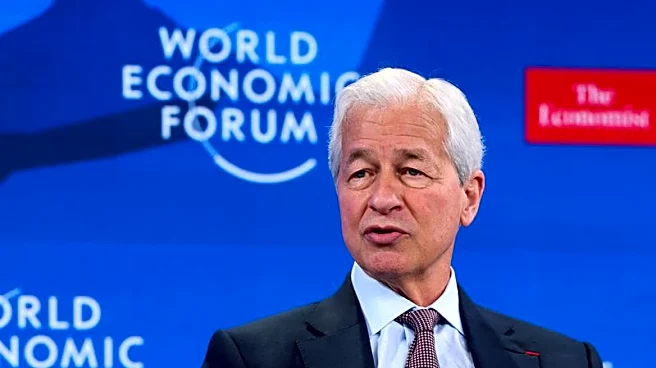
JPMorgan Chase CEO Jamie Dimon has expressed concerns over the U.S. national debt, which has surpassed $39 trillion, with annual interest payments exceeding $1 trillion. Dimon highlighted the missed opportunity of the Simpson-Bowles Commission, which could
have addressed fiscal issues through spending cuts and tax reforms. He emphasized the need for proactive measures to prevent a crisis, as the current trajectory could lead to volatile markets and increased interest rates. Dimon noted that a significant portion of government spending is fixed, related to Medicare, Medicaid, and Social Security, making it challenging to reduce the debt without impacting these programs.
Why It's Important?
The growing national debt poses a significant risk to the U.S. economy, potentially leading to higher interest rates and reduced investor confidence in U.S. Treasuries. This situation could crowd out public investment and increase inflation, affecting economic growth. Dimon's call for crisis management highlights the urgency of addressing fiscal challenges to maintain economic stability. The bipartisan nature of the issue underscores the need for cooperation across political lines to implement effective solutions. Failure to address the debt could result in long-term economic consequences, impacting government spending and the overall financial health of the nation.
What's Next?
Dimon suggests that addressing the national debt should be a priority to avoid crisis management scenarios. This involves bipartisan efforts to implement fiscal reforms, potentially revisiting recommendations from the Simpson-Bowles Commission. The focus should be on balancing spending cuts with economic growth strategies to reduce the debt-to-GDP ratio. Policymakers may need to consider innovative approaches to stimulate growth while managing mandatory spending programs. The outcome of these efforts will significantly impact the U.S. economy's resilience and its ability to navigate future financial challenges.