
What's Happening?
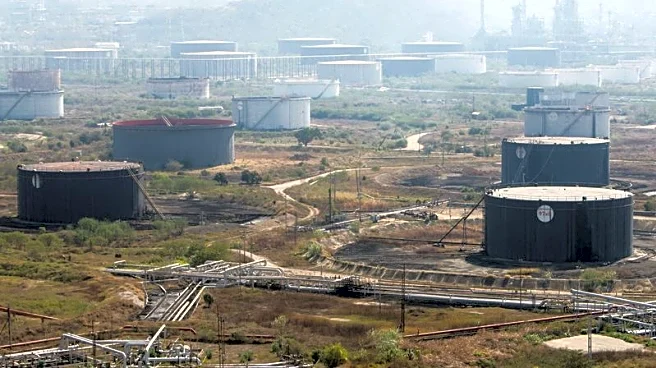
Chevron Corporation plans to finance its Venezuelan oil investments using cash from oil sales rather than injecting new capital. This approach reflects a cautious stance on the rapid revival of Venezuela's
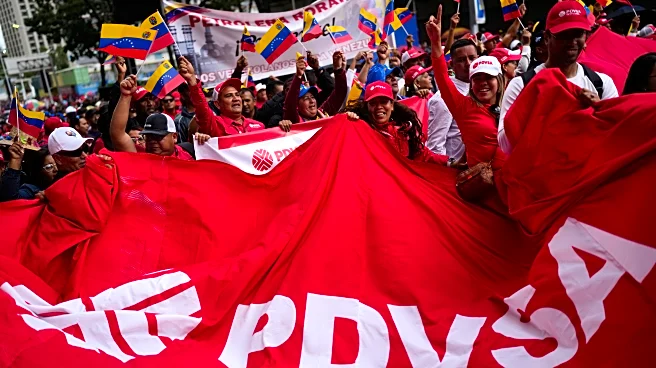
oil industry, which has the world's largest reserves but faces challenges due to past nationalizations. Chevron's Chief Financial Officer Eimear Bonner highlighted the company's intent to increase production by 50% over the next two years, pending U.S. Treasury authorizations. The company currently produces 250,000 barrels per day in joint ventures with PDVSA. Bonner welcomed recent reforms in Venezuela aimed at lowering taxes and encouraging foreign investment, viewing them as steps toward making the country more attractive for future investments.
Why It's Important?
Chevron's strategy to use a self-funding model for its Venezuelan operations is significant for the company's financial health and risk management. By avoiding new capital commitments, Chevron mitigates the risks associated with Venezuela's political and economic instability. This approach also reflects a broader industry trend of cautious investment in regions with volatile political climates. The reforms in Venezuela could pave the way for increased foreign investment, potentially revitalizing the country's oil industry. However, the success of these reforms will depend on the Venezuelan government's ability to maintain stability and uphold the rule of law, which are critical for attracting and retaining foreign investors.
What's Next?
Chevron's future in Venezuela will hinge on the effectiveness of the recent reforms and the U.S. government's stance on authorizing increased production. The company will continue to monitor the political and economic environment in Venezuela, adjusting its strategy as needed. Other oil companies may also evaluate the potential for investment in Venezuela if the reforms prove successful. The broader geopolitical context, including U.S.-Venezuela relations and regional stability, will play a crucial role in shaping the future of oil investments in the country. Stakeholders will need to remain vigilant to changes in the political landscape and their potential impact on the oil industry.