



What's Happening?
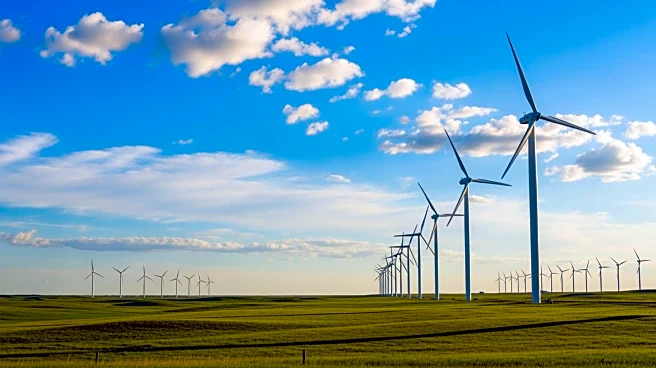
South Dakota regulators have approved a permit for a $750 million wind farm, set to be the largest in the state. The project, developed by Philip Wind Partners, a subsidiary of Invenergy, will feature up to 87 turbines and cover approximately 110 square miles of private land. Located north of Philip, the wind farm is expected to generate 333 megawatts of electricity, enough to power hundreds of thousands of homes. The project will create around 200 construction jobs and 12 long-term positions, with significant economic benefits anticipated for local landowners and governments. The South Dakota Public Utilities Commission has outlined specific requirements for the project's construction and operation, ensuring compliance with state laws. Construction
is slated to begin in June, with commercial operations expected by December 2027.
Why It's Important?
The approval of this wind farm represents a significant step forward in South Dakota's renewable energy efforts. With wind energy already accounting for 58% of the state's electricity generation, this project will further enhance South Dakota's position as a leader in wind energy production. The economic benefits, including job creation and increased tax revenues, will provide a boost to local communities. Additionally, the project aligns with broader national and global efforts to transition to cleaner energy sources, reducing reliance on fossil fuels and mitigating climate change impacts. The successful implementation of this project could serve as a model for other states looking to expand their renewable energy infrastructure.
What's Next?
As construction begins, stakeholders will closely monitor the project's progress to ensure compliance with regulatory requirements and timelines. The project's success could influence future renewable energy initiatives in South Dakota and beyond. Additionally, the economic and environmental impacts of the wind farm will be evaluated to assess its contribution to the state's energy goals. The development may also prompt discussions on further investments in renewable energy infrastructure, as states seek to balance economic growth with environmental sustainability.