

What's Happening?
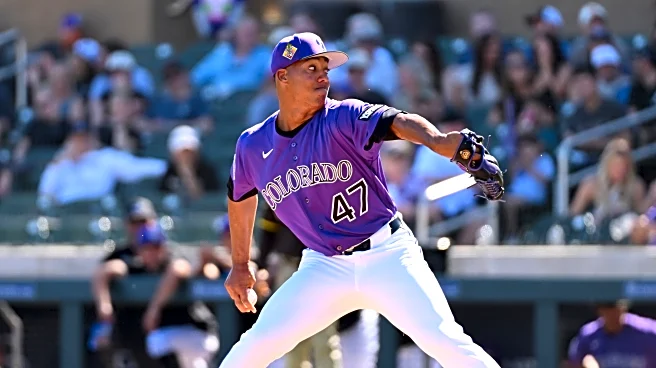
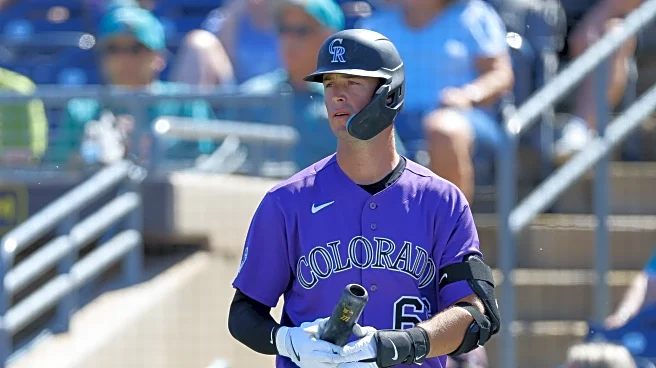
Kyle Freeland, a pitcher for the Colorado Rockies, is set to start on Opening Day for the fifth time in 2026. Freeland has established himself as a significant player in the Rockies' history, being the all-time leader in Wins Above Replacement (WAR) among
the team's starting pitchers. However, the evaluation of his performance is complicated by the unique conditions at Coors Field, where the lower air density affects pitch movement. This has led to discrepancies in WAR calculations, with different models providing varying assessments of his value. Freeland's 2018 season exemplifies this issue, where his performance was rated differently by FanGraphs and Baseball-Reference due to their distinct methodologies. The challenges of pitching at Coors Field, often labeled as 'hitter-friendly,' require pitchers like Freeland to adapt by focusing on weak contact and ground balls rather than overpowering hitters.
Why It's Important?
The evaluation of pitchers at Coors Field raises broader questions about the accuracy of traditional metrics like WAR in unique environments. Freeland's case highlights the need for more nuanced models that account for environmental factors affecting performance. This has implications for how players are valued and compensated, as traditional metrics may not fully capture their contributions. For the Rockies, understanding and accurately assessing their pitchers' value is crucial for building a competitive team. Freeland's ability to perform in such a challenging environment underscores the importance of context in player evaluation, which could influence contract negotiations and team strategies.
What's Next?
As the Rockies prepare for the upcoming season, the focus will be on how well their pitchers, including Freeland, can adapt to the conditions at Coors Field. The team will need to consider these environmental factors in their player development and acquisition strategies. Additionally, there may be discussions within the baseball community about refining evaluation metrics to better account for unique playing conditions. For Freeland, continuing to demonstrate his value in this environment could lead to further recognition and potentially influence future contract terms.
Beyond the Headlines
The challenges faced by pitchers at Coors Field also reflect broader issues in sports analytics, where the need for context-specific metrics is increasingly recognized. This situation highlights the limitations of one-size-fits-all approaches in evaluating player performance. As teams and analysts seek to refine their methods, there may be a push towards developing more sophisticated models that incorporate environmental and contextual factors. This could lead to a shift in how players are scouted, developed, and valued across the league.