



What's Happening?
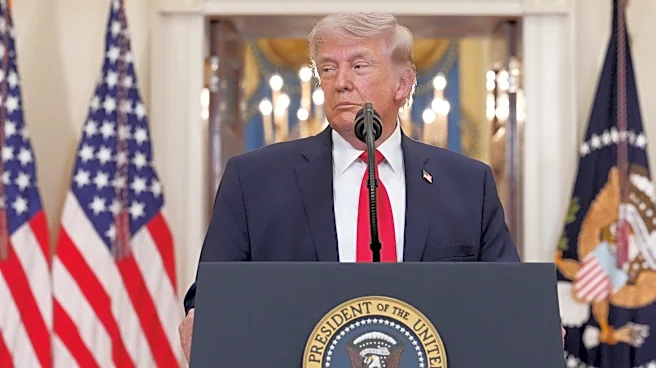
President Trump has signed an executive order aimed at reforming college athletics, focusing on imposing strict transfer limits to stabilize the sport. The order introduces a five-year cap on athletic eligibility and restricts athletes to one transfer during
this period with immediate eligibility. A second transfer would require the athlete to sit out a season. The order also targets fraudulent Name, Image, and Likeness (NIL) arrangements, defining them as payments above fair market value tied to athletic participation. The move is intended to address the financial instability and arms race threatening college sports, particularly football and basketball.
Why It's Important?
The executive order is significant as it addresses the growing concerns over the financial sustainability of college sports programs. The unrestricted transfer portal and NIL deals have led to a chaotic environment, disrupting team rosters and academic continuity. By imposing transfer limits and scrutinizing NIL arrangements, the order aims to restore order and fairness in college sports. This could potentially save smaller programs from financial collapse and ensure a level playing field. The order also highlights the federal government's role in regulating college athletics, which could lead to further legislative actions.
What's Next?
The implementation of the executive order will require federal agencies to assess universities' compliance with the new rules. Institutions violating these rules may face ineligibility for federal grants and contracts. The order may prompt universities to reevaluate their athletic programs and compliance strategies. Additionally, the order could lead to further discussions in Congress, as indicated by Senator Ted Cruz's support for federal action. The response from universities, athletes, and other stakeholders will be crucial in determining the order's impact on college sports.