



What's Happening?
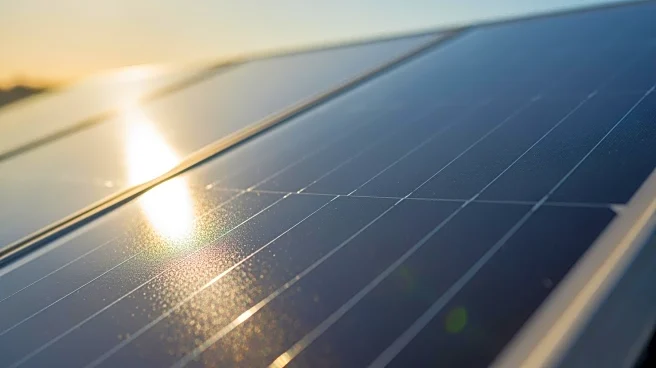
An international research team has developed a dual-layer sol-gel and hydrophobic silica coating that enhances solar cell efficiency by 4.75%. This innovative coating protects solar panels from dust, dirt, and water films without reducing light transmission.
The coating is free from per- and polyfluoroalkyl substances (PFAS), making it environmentally friendly. The research, involving scientists from China, India, and the UK, demonstrates that the coating increases solar cell efficiency from 13.90% to 14.56% by improving light transmission. The coating's durability and chemical stability were tested under various conditions, showing promising results for long-term use.
Why It's Important?
This development is crucial for the solar energy industry as it addresses common issues like dust and dirt accumulation, which can significantly reduce solar panel efficiency. By improving efficiency, this technology can enhance the overall performance and cost-effectiveness of solar energy systems. The environmental benefits are also notable, as the coating does not use harmful chemicals, aligning with global sustainability goals. This innovation could lead to broader adoption of solar technology, reducing reliance on fossil fuels and contributing to cleaner energy solutions.
What's Next?
The research team plans to test the coating in extreme weather conditions, such as Scottish winters and desert climates, to ensure its effectiveness in diverse environments. The goal is to bring the product to market within five years, potentially revolutionizing solar panel maintenance and efficiency. This could prompt further research and development in solar technology, encouraging more investment in renewable energy solutions.