






What's Happening?
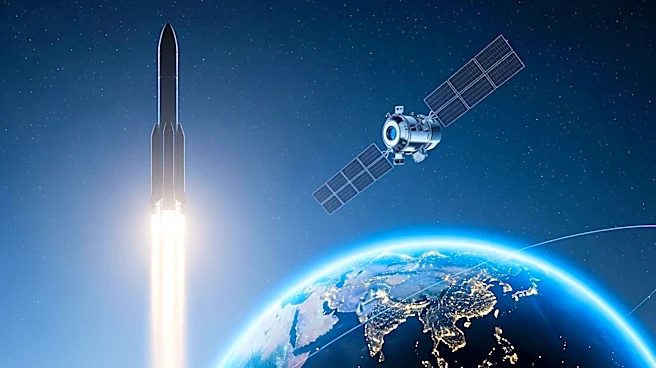
SpaceX successfully launched its Falcon Heavy rocket from NASA's Kennedy Space Center in Florida, marking the rocket's first flight in 18 months. The mission involved deploying the ViaSat-3 F3 satellite, which is designed to provide high-throughput broadband
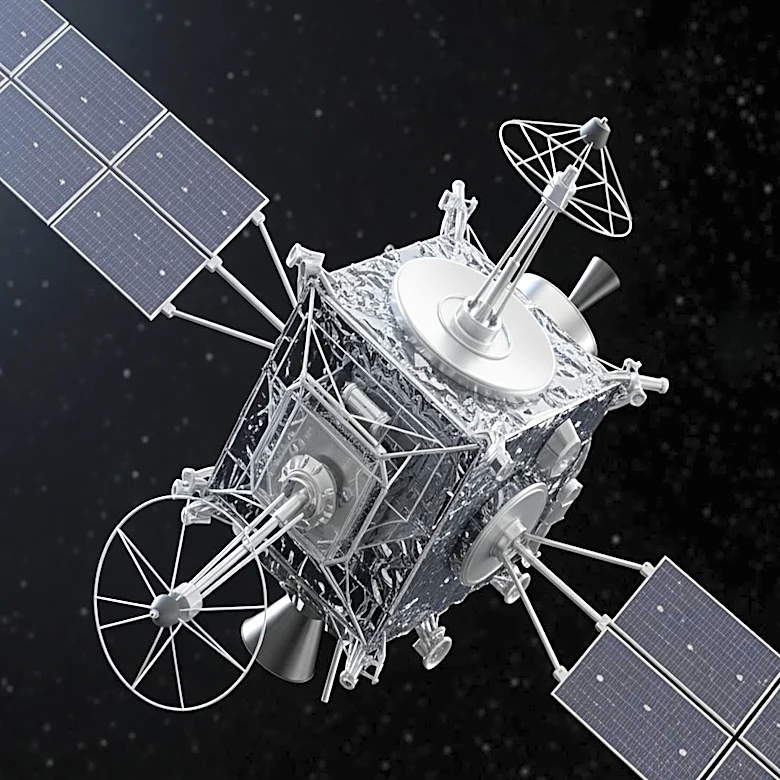
services across the Asia-Pacific region. The Falcon Heavy, known for its powerful thrust, utilized three modified Falcon 9 first-stage boosters. The two side boosters landed safely at Cape Canaveral Space Force Station, while the central booster was expended in the Atlantic Ocean. The ViaSat-3 F3 satellite, weighing 6.6 tons, was placed into geostationary orbit, completing the ViaSat-3 mini-constellation.
Why It's Important?
This launch is significant as it completes the ViaSat-3 satellite constellation, enhancing broadband connectivity across the Asia-Pacific region. The successful deployment of the satellite underscores SpaceX's capability in handling complex space missions and its role in advancing global communication infrastructure. The Falcon Heavy's return to flight also highlights SpaceX's ongoing contributions to space exploration and commercial satellite deployment, reinforcing its position as a leader in the aerospace industry. The mission's success could lead to increased demand for similar launches, benefiting both SpaceX and its commercial partners.
What's Next?
Following the successful deployment of the ViaSat-3 F3 satellite, Viasat will focus on integrating the satellite into its existing network to begin providing services. The completion of the ViaSat-3 constellation is expected to enhance broadband services, particularly in underserved regions. SpaceX, on the other hand, will likely continue to leverage the Falcon Heavy for future missions, potentially expanding its client base and exploring new opportunities in satellite deployment and space exploration.