



What's Happening?
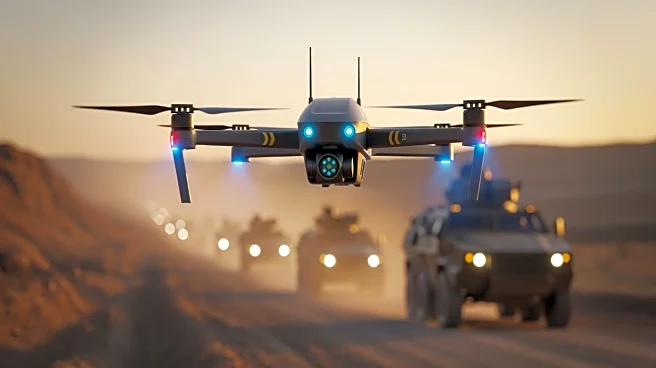
Red Cat Holdings, a developer of Intelligence, Surveillance, and Reconnaissance (ISR) drone technologies, has showcased a coordinated Convoy Route Recon mission using its family of uncrewed systems. The demonstration focused on ensuring the safe passage
of a moving convoy in a non-permissive environment. The Edge 130 drone provided long-range forward ISR, performing overwatch to identify potential threats ahead of the convoy. Upon detecting a possible ambush, the Black Widow™ drone was deployed from a moving vehicle to conduct short-range ISR and verify the threat. The demonstration utilized the Web™ controller and ATAK UAS tool, along with AI-aided target recognition from Sightline/Athena, to support threat identification and confirmation. Following threat confirmation, the Fang™ drone was launched to neutralize the threat, allowing the convoy to continue moving without stopping or exposing itself to unnecessary risk. The scenario concluded with a battle damage assessment, completing the detect, identify, and engage sequence.
Why It's Important?
This demonstration by Red Cat Holdings highlights the growing importance of advanced ISR drone technologies in military operations. The ability to conduct reconnaissance and threat neutralization without halting convoy movement is crucial for maintaining operational momentum and reducing vulnerability in hostile environments. The integration of AI-aided target recognition and autonomous systems enhances the effectiveness and efficiency of military operations, potentially reducing the risk to human personnel. This development underscores the strategic shift towards leveraging unmanned systems for defense applications, reflecting broader trends in military modernization and the increasing reliance on technology to enhance battlefield capabilities.
What's Next?
As Red Cat Holdings continues to develop and refine its ISR drone technologies, further advancements in autonomous systems and AI integration are likely. The successful demonstration of these capabilities may lead to increased interest and adoption by military and defense organizations seeking to enhance their operational effectiveness. Future developments could include expanded applications of these technologies in various military scenarios, as well as potential collaborations with other defense contractors to integrate these systems into broader military strategies. Stakeholders in the defense sector will be closely monitoring these advancements to assess their impact on military operations and strategic planning.