


What's Happening?
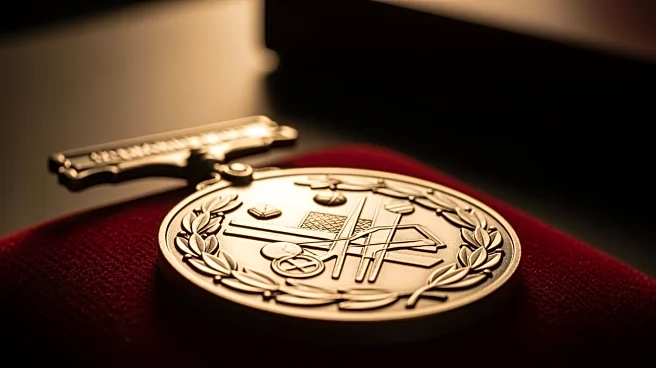
President Trump was presented with the Order of Ikkos medal by Kaillie Humphries, a bobsledder who won two bronze medals for Team USA at the 2026 Milan Cortina Olympics. The ceremony took place at the White House on March 12 during a Women’s History Month
event. Humphries, originally from Canada and now a naturalized U.S. citizen, became emotional as she discussed her IVF journey before presenting the medal. The Order of Ikkos is a special honor that Team USA medal-winning athletes can bestow upon someone who has significantly contributed to their success. Humphries cited President Trump's policies on keeping biological women in women’s sports and expanding IVF access as reasons for her decision to honor him. Trump had signed an executive order in February 2025 to protect and reduce the costs of IVF, as well as Executive Order 14201, which restricts transgender women from competing on women’s sports teams.
Why It's Important?
The presentation of the Order of Ikkos to President Trump highlights the intersection of sports, politics, and social policy. Trump's executive orders have sparked significant debate, particularly regarding the participation of transgender women in sports and access to reproductive health services like IVF. These policies have implications for athletes, sports organizations, and broader societal norms. The U.S. Olympic and Paralympic Committee's alignment with Executive Order 14201 underscores the ongoing discussions about fairness and inclusion in sports. The recognition by an Olympian also reflects the personal impact of political decisions on individual athletes, potentially influencing public opinion and future policy directions.
What's Next?
The recognition of President Trump by an Olympian may prompt further discussions and reactions from various stakeholders, including sports organizations, advocacy groups, and political leaders. The policies highlighted during the ceremony, particularly those affecting transgender athletes and reproductive health, are likely to remain contentious topics. Future legislative or executive actions could be influenced by the public and political response to such recognitions. Additionally, the U.S. Olympic and Paralympic Committee may continue to evaluate and adjust its policies in response to evolving societal norms and legal frameworks.