



What's Happening?
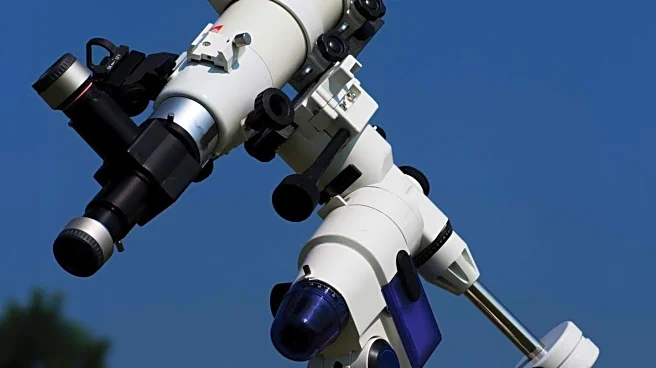
Astronomy enthusiasts have new products to look forward to in 2026, as highlighted by Astronomy Magazine. Among the notable releases is the SkyTracker Pro Camera Mount by iOptron, which offers a lightweight design and multiple tracking rates for capturing celestial events. Another significant product is Celestron's NexImage 20 Solar System Color Imager, featuring a high-resolution sensor for detailed planetary imaging. Additionally, Alan Dyer's ebook, 'How to Capture the Coming Solar Eclipses,' provides guidance for photographing upcoming solar eclipses. These products cater to both amateur and professional astronomers, enhancing their ability to observe and document astronomical phenomena.
Why It's Important?
The introduction of these new products reflects ongoing
advancements in astronomy technology, making it more accessible and effective for enthusiasts and professionals alike. The SkyTracker Pro's portability and versatility allow for easier fieldwork, while the NexImage 20's high-resolution capabilities enable detailed study of celestial bodies. Alan Dyer's ebook serves as a valuable resource for those looking to capture solar eclipses, a rare and awe-inspiring event. These innovations not only enhance the experience of observing the night sky but also contribute to the broader scientific community by facilitating more precise data collection and analysis.
What's Next?
As these products become available, astronomy clubs, educational institutions, and individual enthusiasts are likely to incorporate them into their observational practices. This could lead to increased participation in astronomical events and a greater public interest in space science. Manufacturers may continue to innovate, driven by consumer feedback and technological advancements, potentially leading to even more sophisticated tools for exploring the universe. The upcoming solar eclipses in 2026, 2027, and 2028 will serve as key opportunities for these products to demonstrate their capabilities and for users to engage with the astronomical community.