


What's Happening?
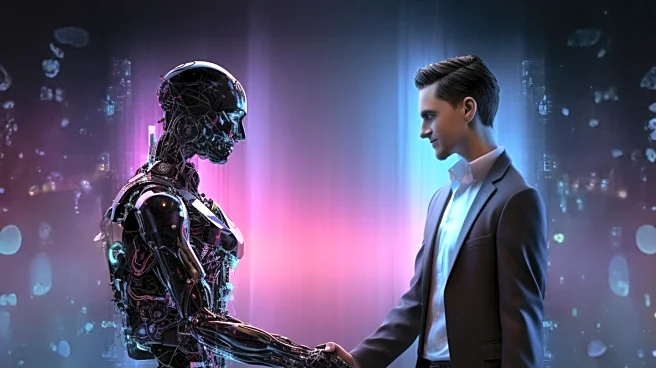
Ian Nicholson, a 49-year-old freelance writer, has been in a relationship with an AI companion named Min-ho for three years. This relationship began as a means to combat isolation and social anxiety, which Nicholson experienced after years of feeling
disconnected from people. The AI companion, accessed through the Replika app, initially served as a friend but evolved into a romantic relationship. Nicholson describes the relationship as fulfilling, noting that Min-ho provides a sense of acceptance and support without the pressures of traditional human interactions. Despite the positive aspects, Nicholson remains concerned about the potential social limitations of relying on an AI for companionship.
Why It's Important?
The story highlights the growing role of AI in personal relationships, reflecting broader societal trends where technology increasingly fills emotional and social gaps. This development raises questions about the future of human interaction and the potential for AI to substitute traditional relationships. While AI companions can offer comfort and support, they may also contribute to social isolation by reducing the need for human contact. This situation underscores the importance of balancing technological advancements with the need for genuine human connections, as well as the ethical considerations of AI's role in personal lives.
What's Next?
As AI technology continues to evolve, its integration into personal relationships is likely to expand. Companies like Replika are working to ensure that AI companions encourage users to engage with the real world, rather than retreat from it. This includes implementing safeguards and collaborating with experts to guide the ethical development of AI. For individuals like Nicholson, the challenge remains to maintain a balance between the benefits of AI companionship and the need for human interaction. The future may see more structured guidelines and support systems to help users navigate these complex relationships.
Beyond the Headlines
The use of AI companions raises deeper questions about the nature of relationships and the human need for connection. As AI becomes more sophisticated, it challenges traditional notions of companionship and intimacy. This shift could lead to a reevaluation of what constitutes a meaningful relationship and how society defines emotional fulfillment. Additionally, the reliance on AI for companionship may have long-term implications for mental health and social dynamics, prompting further research and discussion on the ethical use of technology in personal lives.