



What's Happening?
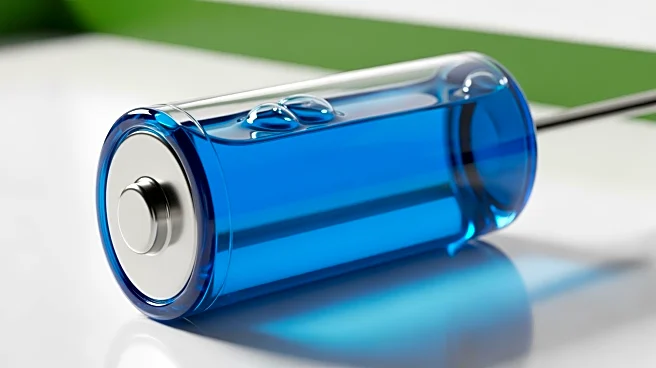
Researchers from the City University of Hong Kong and Southern University of Science and Technology have developed a new water-based battery that could revolutionize energy storage. This battery, made using tofu brine, boasts over 120,000 charge cycles,
significantly outlasting traditional lithium-ion batteries. The new technology is environmentally friendly, using non-toxic, neutral electrolytes, and is non-flammable, addressing safety concerns associated with lithium-ion batteries. The research team highlights the potential for this battery to replace current technologies, particularly in applications like grid storage and electric vehicles, where safety and longevity are critical.
Why It's Important?
This breakthrough in battery technology could have profound implications for the energy sector. The extended lifespan and safety of the water-based battery make it an attractive option for renewable energy storage, potentially enhancing the efficiency and reliability of solar and wind power systems. Additionally, its eco-friendly composition aligns with global efforts to reduce environmental impact and improve sustainability. If scalable, this technology could reduce reliance on lithium, a resource-intensive material, and lower the environmental footprint of battery production and disposal.
What's Next?
The next steps involve scaling the technology for industrial use and ensuring it meets energy density requirements for various applications. Researchers will need to demonstrate the battery's performance outside laboratory conditions and its cost-effectiveness at scale. If successful, this could lead to widespread adoption in sectors like renewable energy, data centers, and military installations, providing a safer and more sustainable energy storage solution.