



What's Happening?
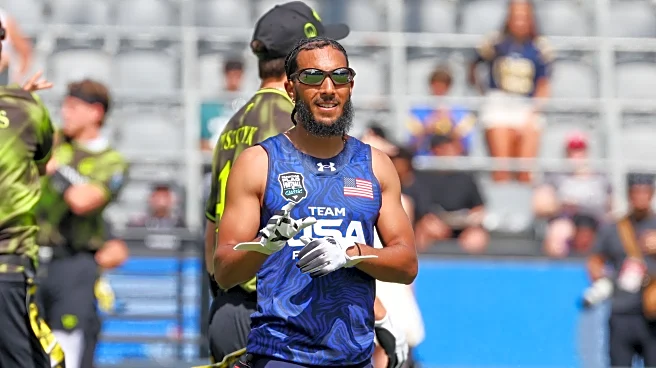
The inaugural Fanatics Flag Football Classic, held at BMO Stadium in Los Angeles, experienced a surprisingly low turnout despite featuring Tom Brady's return to the field. The event, which was recently relocated to Los Angeles, struggled to fill seats,
with many areas of the stadium covered by tarps. The timing of the event, outside the traditional football season, and the nature of flag football, which lacks the physicality of tackle football, contributed to the sparse attendance. The United Football League (UFL) has faced similar challenges, prompting a shift to smaller venues like soccer stadiums to better match audience sizes. The NFL's ongoing efforts to promote flag football as a viable alternative to traditional football have yet to fully resonate with fans, as evidenced by the turnout at this event.
Why It's Important?
The low attendance at the Fanatics Flag Football Classic highlights the challenges faced by the NFL and other organizations in popularizing flag football. As the NFL seeks to diversify its offerings and appeal to a broader audience, the lukewarm reception of flag football events suggests a need for strategic adjustments. This situation underscores the difficulty of shifting fan interest from the traditional, high-contact version of the sport to a less intense format. The outcome of this event could influence future decisions regarding the promotion and scheduling of flag football games, as well as the venues chosen to host them. The NFL's ability to successfully market flag football could have significant implications for its growth strategy and efforts to engage new demographics.
What's Next?
In response to the low turnout, organizers may need to reassess their approach to promoting flag football events. This could involve exploring new marketing strategies, adjusting ticket pricing, or enhancing the fan experience to attract larger crowds. Additionally, the NFL and other stakeholders might consider scheduling flag football events during the traditional football season to capitalize on existing fan interest. The success of future events will likely depend on the ability to effectively communicate the appeal of flag football and differentiate it from traditional football in a way that resonates with fans. Continued efforts to integrate flag football into the broader sports landscape will be crucial for its long-term viability.