
What's Happening?
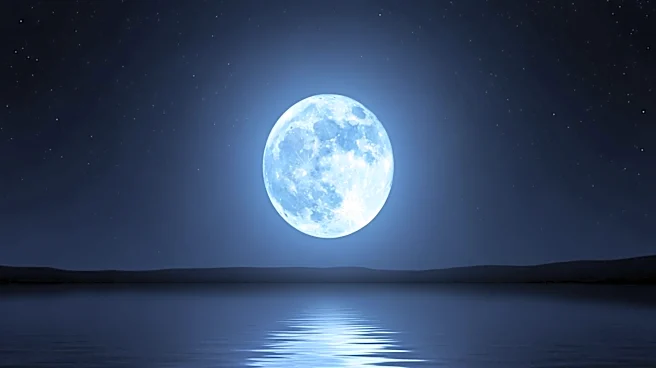
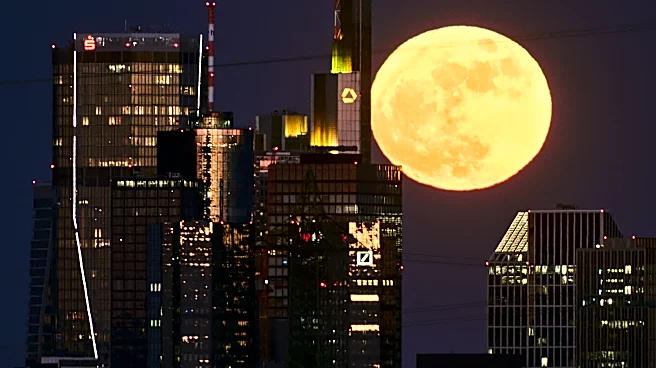
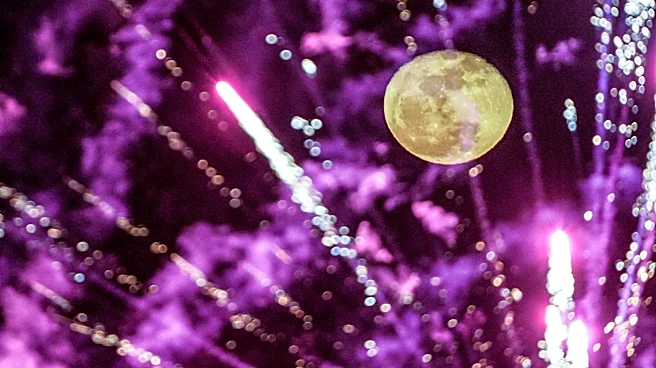
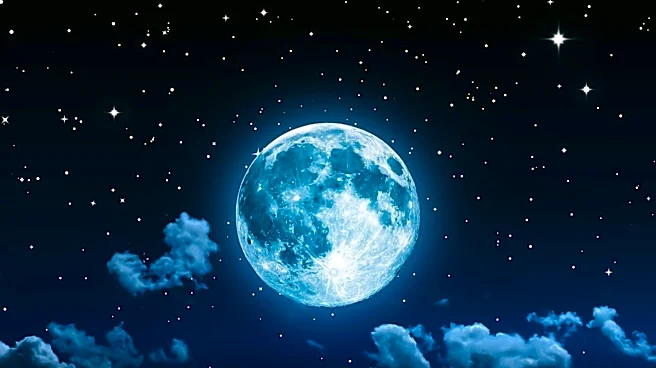
A blue moon, the second full moon in a single month, will be visible this weekend, marking a rare celestial event that occurs approximately every two to three years. Despite its name, the moon will appear
its usual silvery white or golden hue. This event is also a micromoon, meaning it will be near its farthest point from Earth in its orbit. The blue moon will peak at 4:45 a.m. ET on Sunday, offering a unique viewing opportunity for sky watchers. The phenomenon of a blue moon is a result of the moon cycle's 29.5-day duration, occasionally allowing for two full moons within a calendar month.
Why It's Important?
The occurrence of a blue moon is a reminder of the intricate dynamics of celestial bodies and their impact on cultural expressions and language. The term 'once in a blue moon' has become synonymous with rare events, reflecting the moon's influence on human culture. This event provides an opportunity for educational outreach and public engagement with astronomy, encouraging interest in space science and observation. It also highlights the importance of understanding lunar cycles and their effects on Earth, contributing to broader scientific knowledge.
What's Next?
Astronomy enthusiasts and the general public are encouraged to observe the blue moon, which will be most visible in the Americas, Africa, and Europe on the night of May 30. The event offers a chance for amateur astronomers to capture photographs and for educational institutions to host viewing events. The next seasonal blue moon is expected on May 20, 2027, providing another opportunity for observation and study.