



What's Happening?
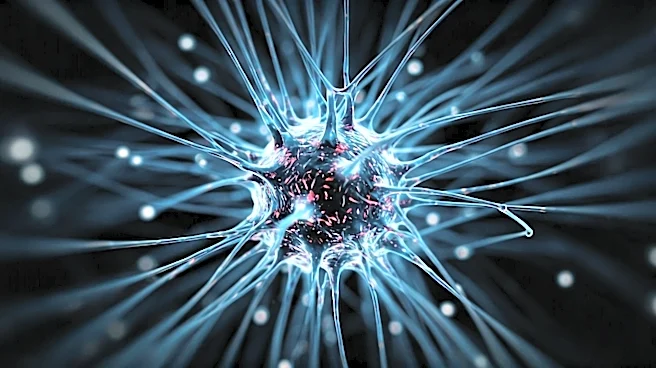
Researchers Ian Whitehouse, Hoony Kang, and Wolfgang Losert have developed a novel algorithm inspired by the rhythmic oscillations of astrocytes, which are support cells in the brain. This 'rhythmic sharing' algorithm is designed to detect subtle shifts
in complex data streams, a phenomenon known as concept drift. The algorithm's unique feature is its sinusoidal variation in connections between computational nodes, which enhances sensitivity to distributional drift. It has been tested on challenging datasets such as NASA C-MAPSS, SWaT, and WADI, which simulate real-world industrial processes. The results show improved F1-scores, indicating the algorithm's effectiveness in identifying anomalies before catastrophic failures occur. This approach not only improves accuracy but also offers a biologically plausible alternative to traditional weight-based learning methods.
Why It's Important?
The development of this algorithm has significant implications for industrial safety and process optimization. By improving the detection of subtle shifts in complex systems, the algorithm can potentially prevent catastrophic failures in industrial settings. This is crucial for industries that rely on continuous monitoring of equipment and processes, such as aerospace and water treatment facilities. The ability to detect anomalies early can lead to more efficient maintenance schedules, reduced downtime, and enhanced safety protocols. Furthermore, the algorithm's biologically inspired design suggests a new direction for artificial intelligence, where adaptability and efficiency are prioritized over brute computational power.
What's Next?
The success of the rhythmic sharing algorithm in detecting drift in complex systems may lead to its adoption in various industrial applications. Future research could explore its integration with existing monitoring systems to enhance their predictive capabilities. Additionally, the algorithm's principles could inform the development of neuromorphic hardware, which mimics the brain's structure and function. This could lead to more efficient and adaptable AI systems. As industries continue to seek ways to improve safety and efficiency, the adoption of such innovative technologies is likely to increase.
Beyond the Headlines
The algorithm's inspiration from astrocytic oscillations highlights the potential of biologically inspired computing. This approach challenges the traditional view that robust AI requires immense computational resources. Instead, it suggests that adaptability and emergent behaviors, as seen in biological systems, can lead to more efficient and effective solutions. This convergence of biology and technology could pave the way for unconventional computing methods that are more aligned with natural processes, offering new insights into both AI development and our understanding of brain function.