






What's Happening?
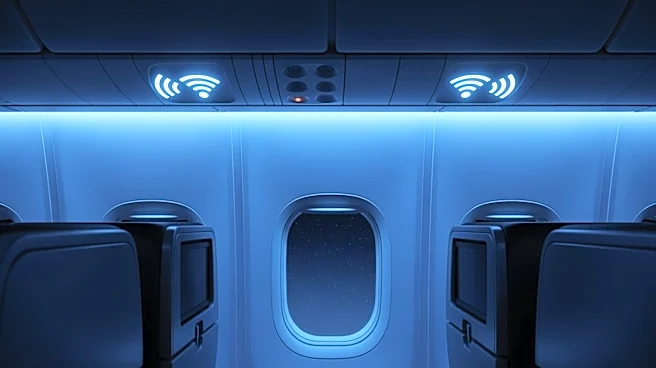
American Airlines has announced plans to install SpaceX's Starlink satellite internet service on more than 500 narrowbody aircraft, starting in the first quarter of 2027. This initiative aims to modernize the airline's in-flight customer experience by
providing high-speed internet capable of supporting streaming, online gaming, and real-time communication. The Starlink system, known for its low Earth orbit satellite constellation, promises to deliver multigigabit connectivity, significantly enhancing the quality of in-flight Wi-Fi. This move is part of American Airlines' broader strategy to improve passenger services and maintain its competitive edge in the aviation industry.
Why It's Important?
The decision to equip its fleet with Starlink's advanced satellite internet service positions American Airlines as a leader in in-flight connectivity. This enhancement is crucial for meeting the growing demand for reliable internet access during flights, as passengers increasingly expect seamless connectivity for work and entertainment. By adopting Starlink, American Airlines can offer a superior travel experience, potentially attracting more customers and increasing passenger loyalty. Additionally, this partnership with SpaceX underscores the importance of technological innovation in the aviation sector, as airlines seek to differentiate themselves through enhanced services. The success of this initiative could influence other airlines to pursue similar upgrades.
What's Next?
As American Airlines prepares to roll out Starlink installations, the focus will be on ensuring a smooth integration process and maintaining high service standards. The airline will likely monitor passenger feedback closely to assess the impact of the new Wi-Fi service on customer satisfaction. Meanwhile, SpaceX's upcoming IPO could benefit from this high-profile partnership, as it demonstrates the company's expanding influence in the commercial aviation market. Other airlines may also evaluate the performance of Starlink on American's fleet and consider adopting similar technologies to remain competitive. The aviation industry will be watching closely to see how this development shapes future in-flight connectivity standards.