



What's Happening?
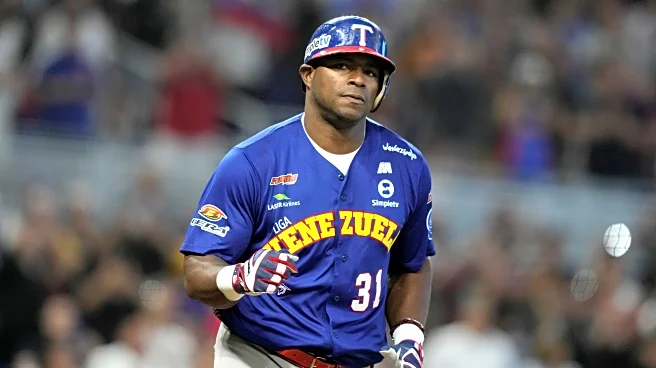
Yasiel Puig, a former outfielder for the Los Angeles Dodgers, has been found guilty of obstruction of justice and lying to federal officials during an investigation into an illegal gambling operation. The U.S. Attorney’s Office announced the verdict following a multi-week trial that included testimonies from Major League Baseball officials and others involved in the case. Puig initially pled guilty to lying to federal agents about his involvement in the gambling operation, which included placing over 900 bets and incurring losses exceeding $280,000. However, he later changed his plea to not guilty, citing new evidence. His legal team argued that Puig, who has a third-grade education and faced language barriers, did not receive adequate support
during his initial interview with federal investigators. Puig now faces up to 20 years in federal prison, with sentencing scheduled for May 26.
Why It's Important?
The case against Yasiel Puig highlights significant issues within the realm of professional sports and gambling. It underscores the potential legal and ethical challenges athletes may face when involved in illegal activities. The outcome of Puig's trial could have broader implications for how gambling-related offenses are prosecuted, particularly involving high-profile sports figures. Additionally, the case raises questions about the support systems available to athletes who may lack the educational or linguistic resources to navigate complex legal situations. The verdict also serves as a cautionary tale for other athletes who might be tempted to engage in similar activities, emphasizing the severe legal consequences that can follow.
What's Next?
Yasiel Puig's legal team plans to file post-trial motions, aiming to overturn the verdict and clear his name. The upcoming sentencing in May will be a critical moment, potentially setting a precedent for similar cases in the future. The case may prompt discussions within Major League Baseball and other sports organizations about the need for better education and resources for athletes regarding legal and financial matters. Additionally, the gambling operation's broader network, including other individuals involved, may face further scrutiny and legal action as authorities continue their investigation.