





What's Happening?
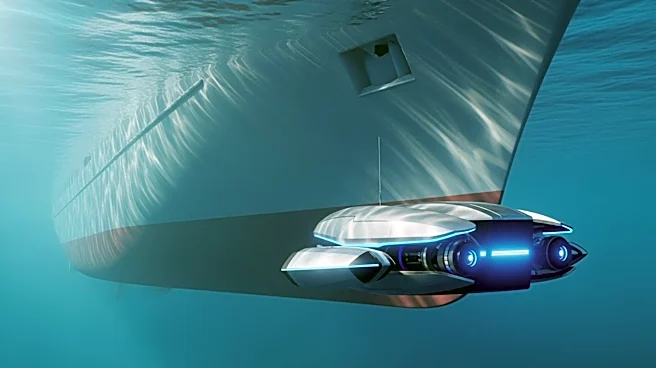
The American Bureau of Shipping (ABS) has entered into a memorandum of understanding with Fleet Robotics to collaborate on the development of autonomous robotic systems for hull cleaning and inspection. Announced during Singapore Maritime Week, this partnership
aims to advance the deployment of robotic systems in vessel maintenance. Patrick Ryan, ABS Senior Vice President and Chief Technology Officer, emphasized the importance of establishing standards and frameworks to facilitate the maritime industry's adoption of these technologies. Sidney McLaurin, CEO of Fleet Robotics, highlighted the potential of in-water inspection to transform decision-making processes related to performance, maintenance, and safety. The project will focus on assessing the suitability of robotic systems for inspection tasks, validating sensor data and imagery, and integrating the technology into existing regulatory and operational workflows.
Why It's Important?
This collaboration between ABS and Fleet Robotics signifies a pivotal move towards integrating technology-driven solutions in the maritime industry. The use of autonomous robotic systems for hull cleaning and inspection can lead to more efficient and safer vessel maintenance practices. By providing high-quality data and enabling in-water inspections, these systems can enhance the accuracy and reliability of class inspections and industry practices. The partnership reflects a growing demand for innovative approaches to vessel maintenance, which could lead to significant cost savings and improved safety standards across the maritime sector.
What's Next?
As ABS and Fleet Robotics work together to develop and validate these autonomous systems, the maritime industry will likely see a gradual shift towards more technology-driven maintenance practices. The successful implementation of these systems could encourage other maritime organizations to adopt similar technologies, potentially leading to widespread changes in how vessel maintenance is conducted. The collaboration may also prompt regulatory bodies to update standards and guidelines to accommodate the integration of autonomous systems in maritime operations.