








What's Happening?
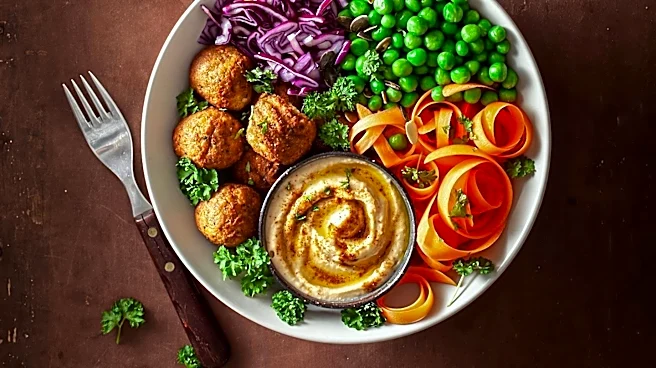
Falafel, a popular Middle Eastern street food, is being reimagined in various innovative ways across the United States. Traditionally made from ground chickpeas mixed with herbs and spices, falafel is typically served as deep-fried balls. However, chefs
and restaurants are now offering creative takes on this classic dish. For instance, Miznon offers a falafel burger with tangy pickles and green chili peppers, while Noor Mediterranean in Phoenix presents a falafel salad with fresh mint and sumac. Pita Jungle in Scottsdale features a Smashed Falafel Grinder, a sandwich with baked falafel and Mediterranean pickles. These variations highlight the versatility of falafel, showcasing it in salads, burgers, and sandwiches, each with unique flavor profiles and presentations.
Why It's Important?
The reinvention of falafel in the U.S. reflects broader culinary trends towards fusion cuisine and plant-based eating. As consumers increasingly seek diverse and healthier food options, falafel's adaptability makes it an attractive choice for both vegetarians and meat-eaters. This trend also underscores the growing appreciation for Middle Eastern flavors in American cuisine, contributing to cultural exchange and culinary diversity. Restaurants benefit by attracting a wider customer base, including those interested in trying new and exotic dishes. Moreover, these innovative dishes can enhance a restaurant's reputation for creativity and inclusivity, appealing to food enthusiasts and health-conscious diners alike.
What's Next?
As the popularity of falafel continues to grow, more restaurants may experiment with this versatile dish, potentially leading to new culinary innovations. Chefs might explore incorporating local ingredients or fusion techniques to create unique falafel offerings. Additionally, the trend could inspire home cooks to experiment with falafel in their kitchens, further spreading its appeal. The increasing demand for plant-based foods suggests that falafel could become a staple in more American households, encouraging further exploration of Middle Eastern cuisine.
Beyond the Headlines
The evolution of falafel in the U.S. highlights the broader cultural integration of Middle Eastern cuisine into mainstream American dining. This trend not only enriches the culinary landscape but also fosters greater cultural understanding and appreciation. As more people experience and enjoy these flavors, it may lead to increased interest in Middle Eastern culture and traditions. Furthermore, the focus on plant-based ingredients aligns with global sustainability efforts, promoting environmentally friendly eating habits.