
What's Happening?
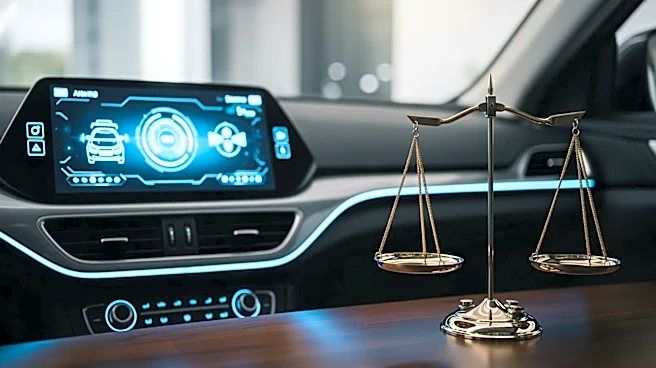
Ben Gawiser, a director of software engineering at Oracle, successfully sued Tesla in a Texas small claims court over the company's failure to deliver on its Full Self-Driving (FSD) promises. Gawiser, who
purchased a Tesla Model 3 Long Range in 2021, paid an additional $10,000 for the FSD feature, which Tesla advertised as capable of eventually driving autonomously. However, Tesla CEO Elon Musk recently announced that older Tesla models would require significant upgrades to achieve unsupervised FSD capabilities, leaving many owners, including Gawiser, dissatisfied. The court awarded Gawiser $10,600 in a default judgment after Tesla failed to appear at the hearing. Tesla has since attempted to extend the appeal deadline, claiming unawareness of the hearing, but the motion was denied.
Why It's Important?
This case highlights growing consumer frustration with Tesla's FSD promises, which have been a significant selling point for the company's vehicles. The lawsuit and subsequent judgment could set a precedent for other Tesla owners who feel misled by the company's advertising. It underscores the challenges Tesla faces in delivering on its ambitious self-driving technology goals, which have been delayed due to hardware limitations in older models. The outcome of this case may influence Tesla's future marketing strategies and its approach to customer communication, potentially impacting its reputation and sales.
What's Next?
Following the court's decision, Gawiser has reached out to Tesla's legal representatives to discuss payment of the judgment. If Tesla refuses to comply, Gawiser plans to seek a writ of execution to seize assets from a Tesla showroom. Meanwhile, Tesla is expected to release a 'lite' version of its latest FSD software for older vehicles in June, which may alleviate some customer dissatisfaction. However, the company continues to face multiple lawsuits over its FSD advertising, both in the U.S. and Europe, which could lead to further legal and financial repercussions.