




What's Happening?
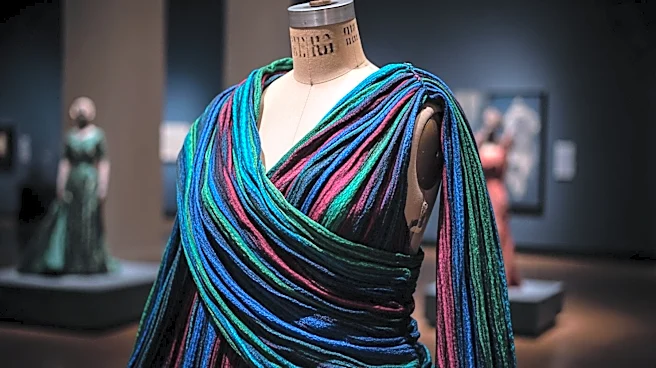
The Metropolitan Museum of Art's Costume Institute is showcasing a new exhibition titled 'Costume Art,' which delves into the intricate relationship between fashion and the human body. Curated by Andrew Bolton, the exhibition juxtaposes couture pieces
with artworks spanning 5,000 years, highlighting fashion as an 'embodied art form.' The exhibition is organized into thematic chapters such as the 'Nude Body,' 'Disabled Body,' 'Aging Body,' and 'Anatomical Body,' each exploring different aspects of how clothing interacts with and represents the human form. Notable pieces include a 2024 Dior 'Bar' suit worn by French singer Yseult, which challenges traditional feminine silhouettes, and Renata Buzzo's 'Corset Anatomia,' which uses foam-filled sculptures to comment on female anatomy and systemic violence. The exhibition runs through January 10, 2027, offering visitors a comprehensive look at how fashion and art intersect to reflect societal and cultural narratives.
Why It's Important?
This exhibition is significant as it underscores the evolving dialogue between fashion and art, emphasizing how clothing can be both a personal and cultural statement. By exploring themes such as body image, gender norms, and societal expectations, 'Costume Art' invites viewers to reconsider the role of fashion beyond aesthetics, as a medium that can challenge and redefine cultural narratives. The exhibition's focus on diverse body representations also highlights ongoing discussions about inclusivity and representation in the fashion industry. This could influence future fashion trends and inspire designers to create more inclusive and thought-provoking collections. Additionally, the exhibition's historical context provides a rich tapestry of how fashion has been used to express identity and social status throughout history, offering insights into the cultural significance of clothing.
What's Next?
As the exhibition continues, it is likely to spark conversations among fashion enthusiasts, historians, and the general public about the role of fashion in society. The Costume Institute may continue to explore similar themes in future exhibitions, potentially influencing other museums and galleries to adopt a more interdisciplinary approach to fashion curation. The exhibition could also inspire designers to incorporate more historical and cultural references into their work, leading to a broader appreciation of fashion as an art form. Additionally, the themes of body positivity and inclusivity may gain further traction in the fashion industry, encouraging brands to embrace diversity in their designs and marketing strategies.
Beyond the Headlines
The 'Costume Art' exhibition also raises questions about the ethical implications of fashion, particularly in terms of sustainability and consumerism. By highlighting the historical and cultural significance of clothing, the exhibition encourages viewers to consider the environmental and social impact of their fashion choices. This could lead to increased awareness and demand for sustainable fashion practices, as consumers become more conscious of the stories behind their clothing. Furthermore, the exhibition's exploration of body image and representation may contribute to broader societal shifts towards body positivity and acceptance, challenging traditional beauty standards and promoting a more inclusive view of fashion.