






What's Happening?
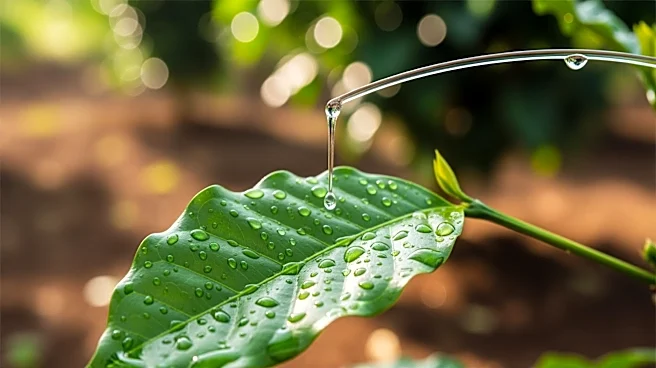
Orbia Advance Corporation's Precision Agriculture business group, Netafim, has released a new Life Cycle Assessment (LCA) study demonstrating that coffee grown using drip irrigation significantly reduces its environmental impact. Conducted in Dak Lak
province, Vietnam, the study highlights that drip irrigation in Robusta coffee cultivation leads to higher yields and substantial reductions in water use, energy consumption, and overall carbon footprint compared to traditional overhead irrigation. The findings are particularly relevant as coffee, a major global commodity, faces challenges from climate volatility and water scarcity. The study underscores the potential of precision irrigation to enhance sustainability in coffee production.
Why It's Important?
The study's findings are crucial for the coffee industry, which is under pressure to increase productivity while managing environmental challenges. Drip irrigation offers a sustainable solution by reducing water and energy use, thus lowering the carbon footprint of coffee cultivation. This is significant for coffee producers and farmers, especially in regions where water scarcity and climate change are pressing issues. The adoption of such technologies can help ensure supply chain resilience, meet environmental standards, and satisfy growing consumer demand for sustainably sourced coffee. This shift could lead to long-term benefits for both the environment and the coffee industry.
What's Next?
As the coffee industry continues to face environmental and economic pressures, the adoption of drip irrigation and other precision agriculture technologies is likely to increase. Coffee producers may invest more in these sustainable practices to enhance yield and reduce environmental impact. Additionally, partnerships between technology providers like Orbia Netafim and coffee companies could expand, promoting the widespread implementation of these solutions. This could lead to a more resilient coffee supply chain, better equipped to handle future challenges related to climate change and resource scarcity.
Beyond the Headlines
The implications of this study extend beyond immediate environmental benefits. The adoption of drip irrigation could influence global agricultural practices, encouraging other sectors to explore similar sustainable technologies. This shift could drive innovation in precision agriculture, leading to broader applications across different crops and regions. Furthermore, as consumers become more environmentally conscious, the demand for sustainably produced goods could reshape market dynamics, influencing how agricultural products are grown and marketed worldwide.