







What's Happening?
Queen Ann Ravioli & Macaroni, a staple in Brooklyn's 'Little Italy,' continues to thrive by using traditional methods and machinery dating back over a century. Managed by George Joseph Switzer III, the shop offers a wide variety of specialized pasta products,
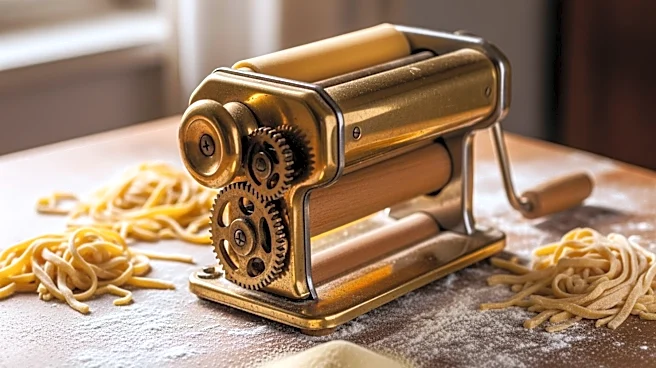
including 25 types of ravioli and 50 different pasta cuts. Despite the dominance of large pasta brands, Queen Ann maintains its niche by focusing on quality and tradition. The shop operates with machinery that resembles a working museum, including a pasta press from 1909, which is believed to be the only one of its kind still in use in the U.S. Switzer, who took over the business in the late 1980s, emphasizes the importance of consistency and craftsmanship in maintaining the shop's reputation. The business generates nearly $2 million in revenue annually, with a significant portion coming from wholesale operations.
Why It's Important?
The story of Queen Ann Ravioli & Macaroni highlights the challenges and resilience of small businesses in the face of industrial competition. As large brands dominate the market, small businesses like Queen Ann offer unique products and personalized service that are increasingly rare. This approach not only preserves culinary traditions but also supports local economies by providing jobs and maintaining cultural heritage. The shop's reliance on century-old machinery underscores a commitment to quality and authenticity, appealing to consumers seeking genuine experiences. The success of such businesses can inspire other small enterprises to leverage their unique strengths and traditions to compete in a globalized market.
What's Next?
Looking ahead, George Joseph Switzer III plans to gradually transition the business to his son, George Joseph Switzer IV, who is already involved in the day-to-day operations. This succession plan aims to ensure the continuity of the family business and its traditional practices. As the younger Switzer takes on more responsibilities, the challenge will be to maintain the delicate balance between preserving tradition and adapting to modern business demands. The future of Queen Ann Ravioli & Macaroni will depend on its ability to innovate while staying true to its roots, potentially exploring new markets or expanding its product line to attract a broader customer base.
Beyond the Headlines
The story of Queen Ann Ravioli & Macaroni also raises broader questions about the sustainability of traditional businesses in a rapidly changing economic landscape. The reliance on old machinery and manual labor highlights the potential vulnerabilities of such operations, including the difficulty of finding skilled workers and the risk of equipment failure. However, it also points to the enduring appeal of artisanal products and the growing consumer interest in authenticity and heritage. As more consumers seek out unique and meaningful experiences, businesses like Queen Ann may find new opportunities to thrive by emphasizing their history and craftsmanship.