




What's Happening?
Ken Macken, CEO of Workr Robotics, provides insights into the current state of industrial robotics, emphasizing the need for practical solutions over general-purpose AI in manufacturing. While recent advancements in AI and robotics have generated excitement,
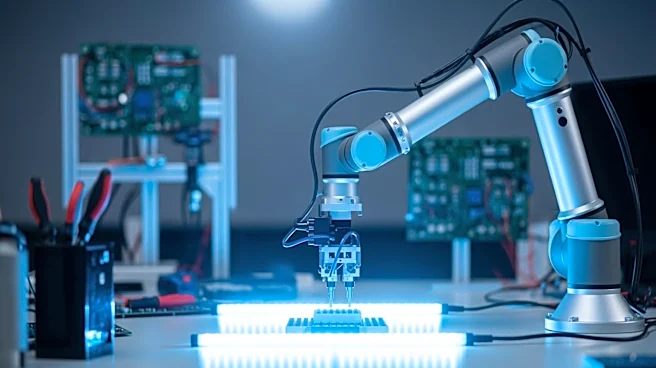
Macken argues that these technologies are not yet ready to address the everyday challenges faced by manufacturers. Workr Robotics focuses on automating repetitive tasks such as palletizing and machine tending, prioritizing operational reliability and rapid deployment. Macken highlights the importance of robots performing specific tasks accurately and consistently, rather than possessing general intelligence. The company offers a 'robotics-as-labor' model, charging by the hour, which reduces the financial risk for manufacturers compared to traditional capital-intensive purchasing models.
Why It's Important?
The discussion led by Ken Macken underscores a critical shift in the robotics industry towards addressing the practical needs of manufacturers. By focusing on task-specific automation, Workr Robotics aims to provide solutions that enhance productivity and reliability on the factory floor. This approach could significantly impact the manufacturing sector by lowering barriers to automation adoption, especially for small to medium-sized enterprises that may not have the capital for large-scale investments. The 'robotics-as-labor' model offers flexibility and reduces financial risk, potentially leading to wider adoption of automation technologies. This shift could drive efficiency and competitiveness in the U.S. manufacturing industry, addressing labor shortages and increasing output.
What's Next?
As Workr Robotics continues to promote its practical automation solutions, the company may influence other robotics firms to adopt similar models that prioritize operational consistency and financial accessibility. Manufacturers might increasingly seek automation solutions that offer flexibility and adaptability to changing production needs. The industry could see a trend towards more specialized, task-oriented robots that can be quickly deployed and reconfigured. This evolution may lead to broader discussions on the role of AI in manufacturing, focusing on how technology can be integrated into existing processes to enhance productivity without disrupting operations.
Beyond the Headlines
The emphasis on practical automation solutions highlights a broader industry trend towards balancing technological innovation with real-world applicability. This approach raises questions about the future of AI in manufacturing and the potential for robots to complement human labor rather than replace it. Ethical considerations may arise regarding the impact of automation on employment and the need for workforce retraining. Additionally, the shift towards flexible, task-specific robots could influence global manufacturing strategies, as companies seek to optimize production in response to market demands and supply chain challenges.