





What's Happening?
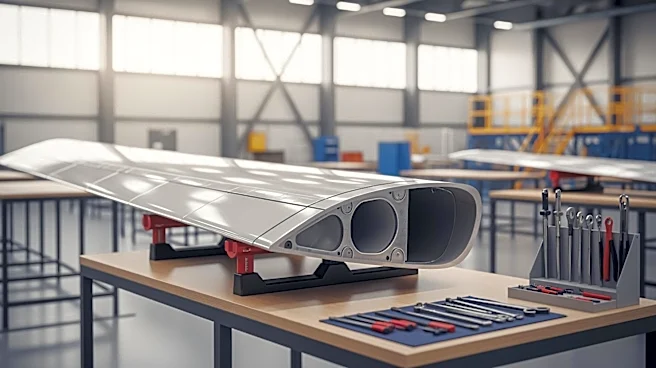
Boeing is set to commence production of new 737 Max airplanes on July 6 at a newly established final assembly line in Everett, Washington. This move is part of Boeing's strategy to increase the production rate of the 737 Max to 52 jets per month by next
year. Currently, Boeing manufactures 47 Max planes monthly, having increased from 42 earlier this year. The new assembly line will initially focus on producing the 737 Max 10, a stretch version of the single-aisle aircraft, which is anticipated to receive FAA certification by the end of the year. This expansion comes after the Federal Aviation Administration imposed production limits following a safety incident in January 2024, where a door plug blew out on an Alaska Airlines plane, prompting extensive safety and quality reviews.
Why It's Important?
The expansion of Boeing's production capabilities is significant for the aerospace industry and the U.S. economy. Increasing the production rate of the 737 Max is crucial for Boeing to meet growing demand and recover from past production setbacks. The new assembly line in Everett not only aims to boost output but also reflects Boeing's commitment to improving safety and quality standards. This development could enhance Boeing's competitive position in the global aerospace market, potentially leading to increased sales and market share. Additionally, the expansion may create new jobs and stimulate economic activity in the Everett region, contributing to local economic growth.
What's Next?
Boeing's next steps involve ensuring the stability and efficiency of the new production line while maintaining high safety and quality standards. The company aims to achieve a long-term production goal of 63 jets per month, contingent on supply chain capabilities. The successful certification of the 737 Max 10 by the FAA will be a critical milestone, enabling Boeing to proceed with deliveries and further expand its market presence. Stakeholders, including investors and industry partners, will closely monitor Boeing's progress in scaling production and addressing any remaining safety concerns.