


What's Happening?
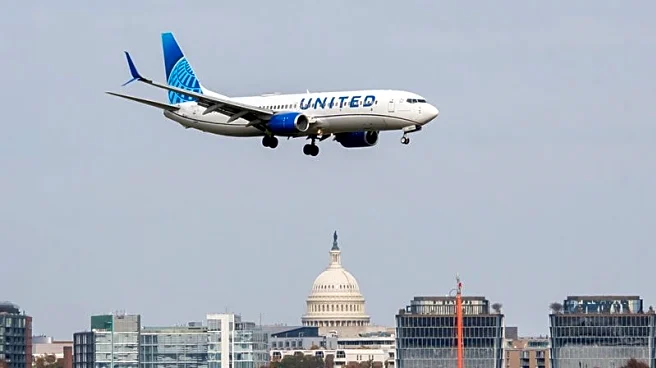
United Airlines is bracing for a significant increase in operational costs due to soaring oil prices, a consequence of the ongoing U.S.-Israel conflict with Iran. The airline's CEO, Scott Kirby, has outlined a scenario where oil prices could reach $175
per barrel and remain above $100 until the end of 2027. This situation has been exacerbated by disruptions in air traffic to key Middle Eastern hubs, forcing planes to take longer routes that consume more fuel. United Airlines, which spent $11.4 billion on fuel last year, could see this expense rise to over $20 billion if current prices persist. Despite these challenges, United's financial health remains robust, with strong demand and record revenue weeks recently. However, the airline plans to reduce capacity during off-peak times and at certain hubs, including Chicago O'Hare, while maintaining its long-term growth plans.
Why It's Important?
The potential for sustained high oil prices poses a significant challenge to the airline industry, which is still recovering from the impacts of the COVID-19 pandemic. For United Airlines, the increased fuel costs could severely impact profitability and operational strategies. The airline's decision to cut capacity in certain areas reflects a strategic response to manage costs without compromising long-term growth. This situation also highlights the broader economic implications of geopolitical conflicts, as disruptions in oil supply chains can lead to increased costs across various industries. Other airlines, such as SAS and Air France-KLM, are also adjusting their operations in response to rising fuel prices, indicating a widespread impact on the global aviation sector.
What's Next?
United Airlines plans to continue its investment in new aircraft and infrastructure, despite the current challenges. The airline aims to avoid furloughs and maintain its growth trajectory by focusing on long-term strategies rather than short-term cost-cutting measures. The situation in the Middle East remains fluid, and any resolution could lead to changes in oil prices and airline operations. In the meantime, United and other airlines will likely continue to adapt their strategies to manage the financial impact of high fuel costs. The industry will be closely monitoring geopolitical developments and their potential effects on oil supply and prices.