







What's Happening?
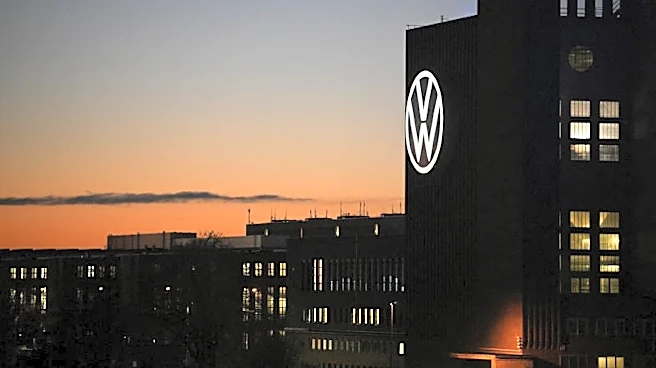
Volkswagen is grappling with significant operational challenges as it seeks to align its production capacity with market demand. The company sold approximately nine million vehicles in 2025, despite having a production capacity for 12 million, leading
to a reduced operating margin of 2.8%. Geopolitical disruptions and the U.S. tariff regime have exacerbated these financial pressures. Volkswagen's Chief Executive, Oliver Blume, has committed to capping global capacity at nine million units and aims for a 20% cost reduction and a return to 8-10% margins by 2030. Meanwhile, Volkswagen's Works Council Chief, Daniela Cavello, and labor union IG Metall have reaffirmed a 2024 restructuring agreement that opposes compulsory redundancies or plant closures in Germany until at least 2030. However, the closure of the Dresden Transparent Factory in December 2025 and potential repurposing of the Osnabrück plant for military logistics highlight the ongoing challenges.
Why It's Important?
The situation at Volkswagen underscores the broader impact of geopolitical tensions and tariff policies on global automotive operations. The company's efforts to streamline operations and reduce costs reflect a strategic response to these pressures. The potential sale of Volkswagen's Zwickau plant to Xpeng, a Chinese automaker, could signify a shift in the company's industrial strategy, raising concerns about job security and the future of EV production in Germany. The involvement of Chinese firms in European automotive production could also alter competitive dynamics in the industry. Additionally, the repurposing of plants for military logistics, despite local opposition, highlights the complex ethical and strategic considerations companies face in maintaining operations amidst financial constraints.
What's Next?
Volkswagen's future actions will likely focus on negotiating with stakeholders to balance cost reductions with commitments to labor agreements. The outcome of talks with Xpeng and the potential sale of the Zwickau plant will be pivotal in shaping Volkswagen's production strategy. The company's ability to navigate these challenges while maintaining its market position will be closely watched by industry analysts and stakeholders. Additionally, the response from labor unions and local governments to any further plant closures or repurposing will be critical in determining the company's operational landscape in the coming years.