






What's Happening?
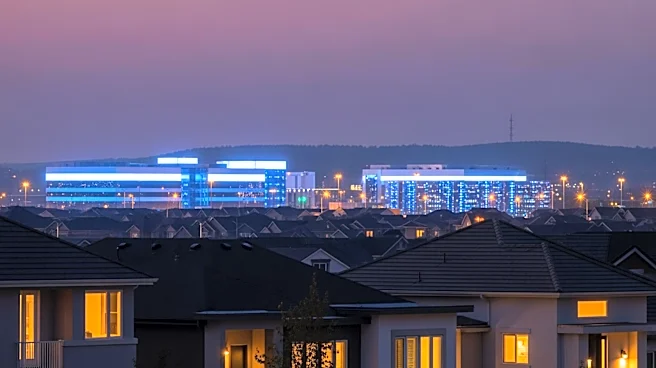
The expansion of data centers in the U.S. is facing opposition from a coalition dubbed 'data center doomers,' which includes socialists, Democrats, and foreign-funded activists. These groups are pushing for moratoriums on data center construction, citing
concerns over land use and water resources. Data centers are crucial for the AI revolution and national security, but their development often leads to the rezoning of agricultural land and strains on local water supplies. The Washington Examiner argues that while data centers are essential, their expansion should not come at the expense of family farms and water resources. The solution proposed involves smarter zoning, co-locating data centers with power sources, and using water-saving technologies.
Why It's Important?
The debate over data center expansion highlights the tension between technological advancement and environmental sustainability. Data centers are vital for maintaining the U.S.'s competitive edge in AI and other technologies, but their growth can negatively impact rural communities by consuming large amounts of water and converting farmland into industrial sites. Finding a balance is crucial to ensure that technological progress does not undermine agricultural productivity or deplete water resources. This issue is particularly significant in states like Virginia and Texas, where data center growth is most pronounced. The outcome of this debate could influence future policies on land use and resource management.
What's Next?
As the debate continues, stakeholders are likely to push for policies that balance data center growth with environmental protection. This could involve stricter zoning laws to protect farmland, incentives for using water-efficient technologies, and strategic placement of data centers near power sources to reduce environmental impact. The federal and state governments may also play a role in facilitating this balance by enacting standards that protect rural areas while supporting technological infrastructure. The ongoing discussions and potential policy changes will be crucial in shaping the future landscape of data center development in the U.S.