






What's Happening?
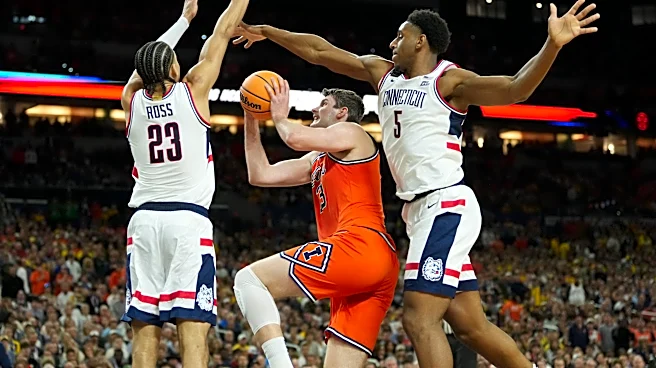
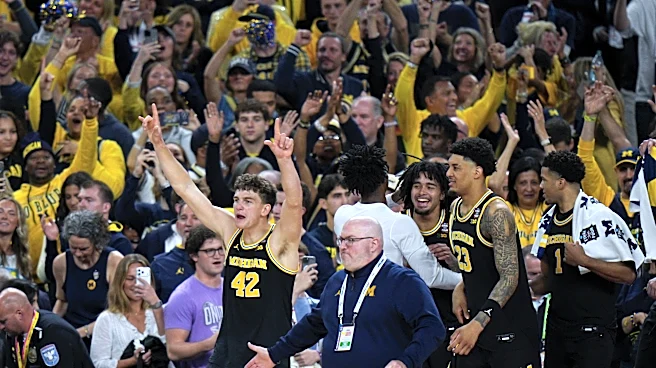
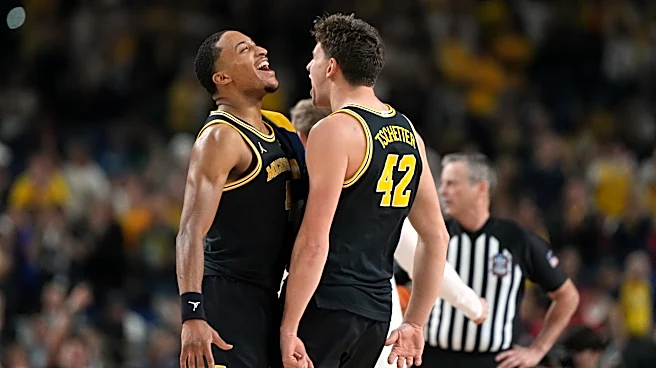
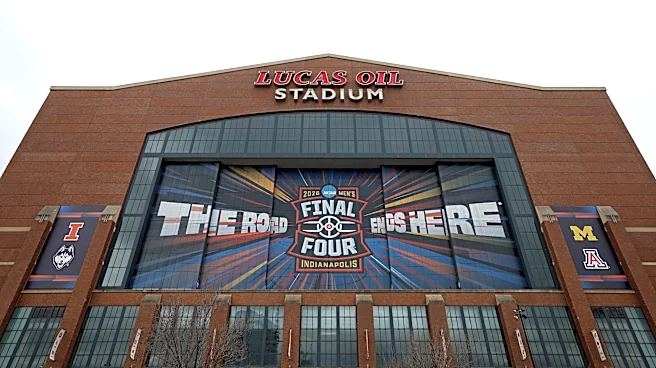
The NCAA Men's Basketball National Championship game is set to take place at Lucas Oil Stadium in Indianapolis, featuring a matchup between the University of Michigan and the University of Connecticut (UConn). Michigan, seeking its first national title
since 1989, advanced to the championship by defeating Arizona, while UConn, aiming for its third title in four years, overcame Illinois in the Final Four. The game has generated significant interest, with ticket demand reportedly up by 23% compared to the previous year. According to SeatGeek, the average ticket price for the 2026 championship is $699, a notable increase from the $569 average for the 2025 title game. The Midwest, particularly Michigan, leads in ticket purchases, with 27% of buyers hailing from the state.
Why It's Important?
The heightened demand for tickets underscores the significance of this championship game, not only for the teams involved but also for the broader college basketball community. Michigan's pursuit of a national title after decades and UConn's potential to solidify its dynasty status contribute to the game's allure. The economic impact is also notable, as increased ticket sales and higher prices reflect the event's draw. This surge in interest benefits local businesses and the host city, Indianapolis, by attracting fans and generating revenue. Additionally, the game highlights the competitive nature of college basketball, with storied programs like Michigan and UConn drawing national attention.
What's Next?
As the championship game approaches, both teams are expected to prepare intensively, with Michigan focusing on ending its long title drought and UConn aiming to continue its recent success. The outcome of the game could influence future recruitment and the programs' standings in college basketball. Fans and analysts will be watching closely to see if Michigan can secure a historic victory or if UConn will further cement its legacy. The game's result may also impact coaching decisions and strategies for the upcoming seasons.