



What's Happening?
On May 22, the 'Redshift' performance at Heft Gallery in New York City offered an immersive audiovisual experience, blending live electronic music, custom visuals, and NASA-inspired imagery. Created by artist Ashley Zelinskie and DJ/Producer illich Mujica,
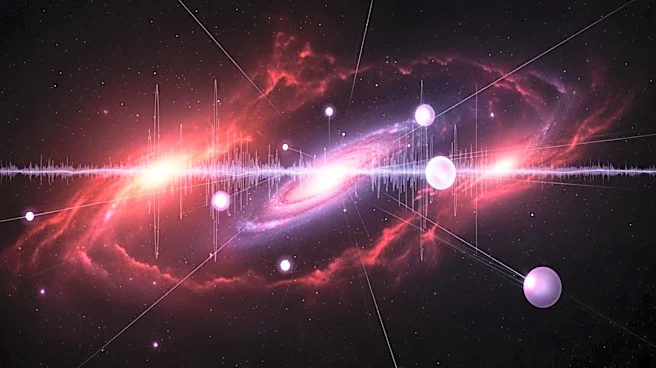
the event featured visuals based on images from the James Webb Space Telescope (JWST) and a soundtrack that included ambient electronica and psychedelic rock. The performance explored the concept of redshift, the stretching of light across space and time, and included a listening session of NASA's Golden Record. The event also incorporated spoken-word narration and samples from space-related podcasts, creating a cosmic journey through light and sound.
Why It's Important?
The 'Redshift' performance highlights the intersection of art, science, and technology, showcasing how space exploration can inspire creative expression. By using JWST imagery and NASA's Golden Record, the event connects audiences with the wonders of the universe and the ongoing exploration of space. This fusion of art and science can foster public interest in space missions and scientific discoveries, potentially inspiring future generations of artists and scientists. The performance also demonstrates the potential of immersive experiences to engage audiences in new and meaningful ways.
Beyond the Headlines
The 'Redshift' performance reflects a broader trend of integrating scientific themes into artistic endeavors, blurring the lines between disciplines. This approach can lead to new forms of storytelling and audience engagement, as well as collaborations between artists and scientists. The use of AI tools in creating visuals for the performance also highlights the growing role of technology in art, raising questions about the future of creativity and the ethical implications of AI-generated content. As technology continues to evolve, such interdisciplinary collaborations may become more common, offering new opportunities for innovation and exploration.