

What's Happening?
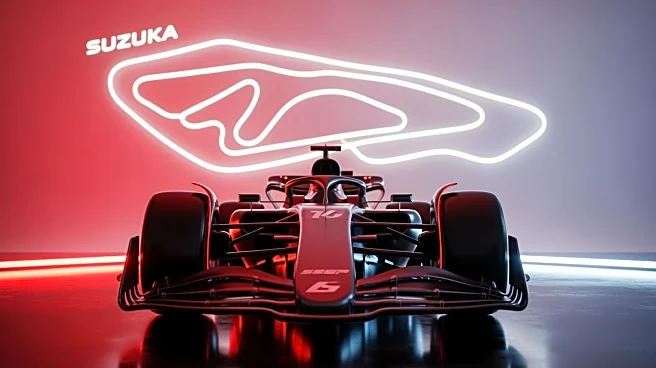
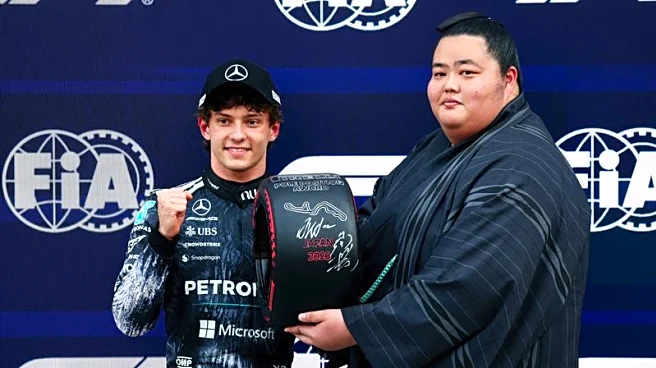
Mercedes driver Kimi Antonelli clinched his second career Formula 1 victory at the Japanese Grand Prix. Despite a slow start that saw him drop to fifth place from pole position, Antonelli capitalized on a mid-race safety car incident to regain the lead.
The safety car was deployed after Haas driver Oliver Bearman crashed at Spoon corner, hitting the barriers with a force of 50G. Fortunately, Bearman avoided any bone fractures. Antonelli then built a significant lead over McLaren's Oscar Piastri, who finished second. Ferrari's Charles Leclerc completed the podium after a thrilling late-race battle with George Russell, who ended in fourth place.
Why It's Important?
Antonelli's victory at the Japanese Grand Prix is significant for several reasons. It highlights the young driver's potential and skill, reinforcing Mercedes' strategic decision to invest in emerging talent. This win also impacts the championship standings, potentially altering team strategies and driver dynamics as the season progresses. For Mercedes, maintaining a competitive edge is crucial in the highly contested Formula 1 landscape, where every race can influence the overall championship outcome. The race also underscores the importance of safety measures in Formula 1, as evidenced by Bearman's high-impact crash and subsequent safety protocols.
What's Next?
Following this victory, Kimi Antonelli and the Mercedes team will likely focus on maintaining their momentum in upcoming races. The team's strategy will be crucial in securing further wins and improving their position in the championship standings. Other teams, such as McLaren and Ferrari, will analyze their performance to enhance competitiveness. The incident involving Oliver Bearman may prompt Haas to review their car's safety features and performance to prevent future accidents. As the season continues, all teams will be keenly aware of the need to adapt and respond to the evolving competitive landscape.