







What's Happening?
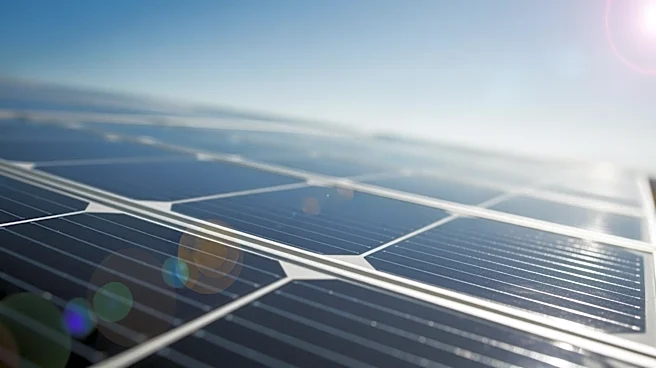
Recent advancements in floating solar photovoltaic (PV) technology have been made with the development of foam-based systems that incorporate air bubblers. This innovation, led by Koami Soulemane Hayibo, a PhD candidate at Western University, aims to enhance
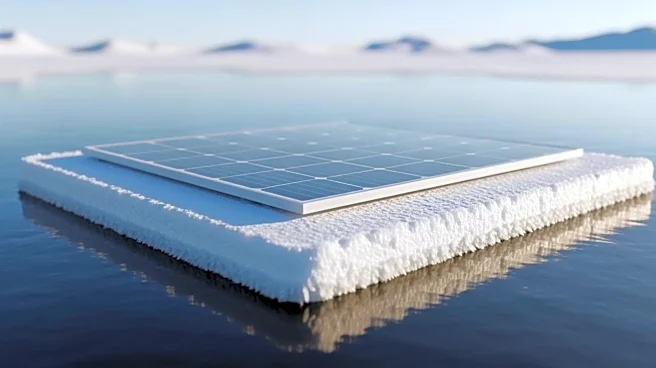
the efficiency and feasibility of floating solar panels in cold climates. The system uses polyethylene foam slabs to support the solar modules, allowing them to float slightly above the water surface. This design not only provides insulation but also includes air bubblers to prevent ice formation. The research indicates that these foam-based systems can generate more energy annually compared to traditional models, particularly in cold environments. The study also highlights the potential for these systems to reduce water evaporation, contributing to water conservation efforts.
Why It's Important?
The development of foam-based floating solar PV systems is significant as it addresses the challenges of deploying solar technology in cold climates, where traditional systems may not perform optimally. By improving energy yield and offering economic advantages, this innovation could expand the adoption of solar energy in regions previously considered unsuitable. This advancement supports the broader goal of increasing renewable energy sources, which is crucial for reducing carbon emissions and combating climate change. Additionally, the potential for water conservation through reduced evaporation presents an added environmental benefit. If widely adopted, this technology could play a key role in diversifying energy portfolios and enhancing energy security in cold regions.
What's Next?
The next steps for foam-based floating solar PV systems involve scaling up research to test their viability on a commercial level. This includes exploring their application across various water bodies and climates to determine their broader market potential. Stakeholders in the renewable energy sector, including policymakers and investors, will likely monitor these developments closely. Successful commercialization could lead to increased investment in similar technologies and further innovation in the solar energy field. Additionally, ongoing research will focus on optimizing the design and efficiency of these systems to ensure they remain economically competitive with existing solar technologies.