


What's Happening?
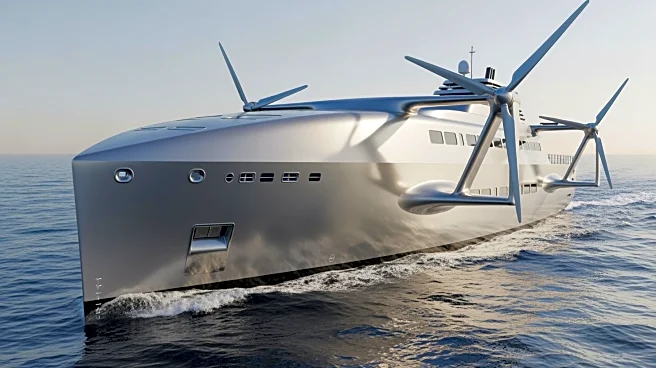
The Maritime Technologies Forum (MTF) has issued new safety guidelines for ships utilizing wind-assisted propulsion systems. As the shipping industry increasingly adopts these technologies to reduce fuel consumption and emissions, the guidelines aim to ensure
safe operations. The recommendations focus on developing safety management systems for vessels equipped with rotor sails, suction sails, and wing sails. The report addresses operational, technical, and organizational challenges, including impacts on maneuverability, visibility, maintenance, and emergency preparedness. The MTF emphasizes the importance of structured risk assessments and continuous monitoring of incidents and near-misses to enhance operational performance. Cristina Saenz de Santa Maria, Interim CEO Maritime at DNV, highlighted the collective effort of MTF members and industry stakeholders in prioritizing safety during the industry's decarbonization efforts.
Why It's Important?
The introduction of these guidelines is significant as the shipping industry undergoes a major transformation towards decarbonization. Wind-assisted propulsion systems offer a promising solution to reduce fuel consumption and emissions, aligning with global environmental goals. By providing clear recommendations, the guidelines help companies manage the operational, technical, and organizational aspects of these systems, ensuring safety remains a priority. This initiative supports the industry's transition to a more sustainable future, potentially influencing regulatory frameworks and technological advancements. Companies adopting these guidelines can mitigate risks associated with new technologies, thereby protecting their investments and enhancing their reputation for safety and environmental responsibility.
What's Next?
As the shipping industry continues to evolve, companies are expected to integrate these guidelines into their safety management systems. The MTF's recommendations may influence future regulatory developments, encouraging broader adoption of wind-assisted propulsion systems. Stakeholders, including shipbuilders, operators, and regulatory bodies, will likely collaborate to refine and implement these guidelines, ensuring they remain relevant as technologies advance. Continuous monitoring and reporting of incidents will provide valuable data to further improve safety standards. The industry's commitment to decarbonization and safety could lead to increased investment in research and development of innovative propulsion technologies.