







What's Happening?
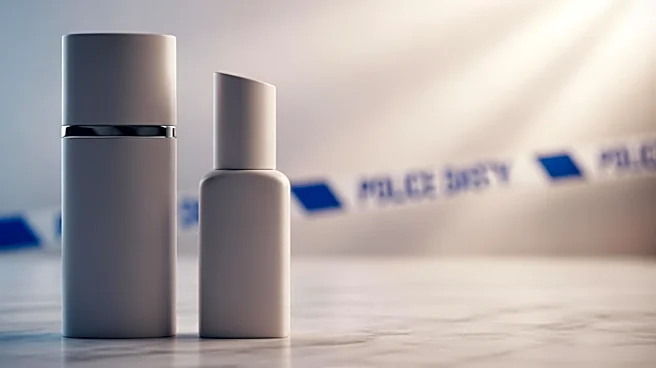
A legal dispute has emerged between two skincare brands, Saint Crewe and Bubble Beauty, over the visual appearance of their product packaging. Saint Crewe, operating under 1135 Skincare, LLC, has filed a lawsuit in federal court in Texas seeking a declaratory
judgment that its packaging does not infringe on Bubble Beauty's alleged trade dress. Bubble Beauty had previously sent cease-and-desist letters to Saint Crewe, demanding a halt in sales and a recall of products, claiming rights over the visual elements of its packaging. Saint Crewe argues that Bubble's packaging lacks the distinctiveness required for trade dress protection, citing inconsistencies in Bubble's product presentation.
Why It's Important?
This case highlights the growing importance of packaging aesthetics in the beauty industry, where visual elements serve as key branding signals. As companies increasingly rely on the 'look and feel' of their products to engage consumers, disputes over trade dress rights are becoming more common. The outcome of this case could set a precedent for how courts handle trade dress claims in industries where design elements are widely adopted. It underscores the tension between protecting brand identity and the widespread use of similar aesthetics, which could impact competitive strategies and consumer perceptions in the skincare market.
What's Next?
The court's decision will likely influence future trade dress disputes in the beauty industry, particularly regarding unregistered trade dress claims. If Saint Crewe succeeds, it may encourage other companies to challenge similar claims, potentially leading to a reevaluation of what constitutes distinctive packaging. The case could also prompt brands to reconsider their packaging strategies to ensure they meet legal standards for trade dress protection. Stakeholders in the beauty industry will be closely monitoring the case for its implications on branding and market competition.
Beyond the Headlines
The dispute reflects broader challenges in aesthetics-driven markets, where packaging serves not only as branding but also as a tool for differentiation and consumer engagement. As visual elements become more ubiquitous, companies may face difficulties in establishing exclusive rights, leading to strategic shifts in how they approach design and marketing. This case could influence how brands navigate the balance between innovation and legal compliance in their packaging strategies.