

What's Happening?
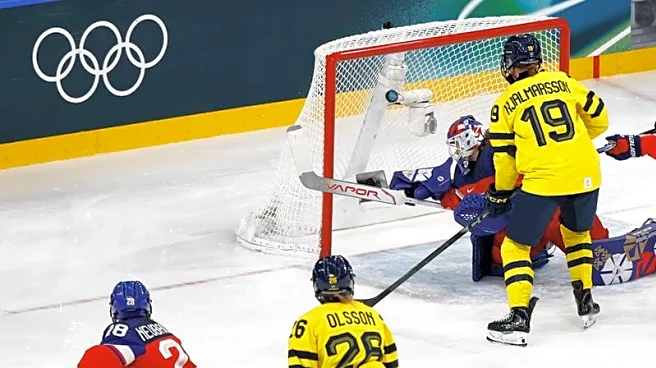
Slovakia has advanced to the quarterfinals in men's hockey at the 2026 Winter Olympics, despite a 5-3 loss to Sweden in their final preliminary round game. The advancement was secured due to a tiebreaker, as Slovakia won Group B after Finland's significant 11-0 victory over Italy. This result was influenced by goal differential among the three tied teams. Dalibor Dvorsky, a player for the St. Louis Blues, scored a crucial goal with 39 seconds remaining, which was celebrated by the Slovakian team. Despite the loss, Slovakia's Juraj Slafkovsky, the reigning Olympic MVP, expressed satisfaction with the outcome, calling it the best loss of his life. Sweden, on the other hand, was left to reflect on a missed opportunity, despite winning the game. Sweden's
coach, Sam Hallam, made a strategic decision to pull the goaltender in the final seconds, but the team did not score again.
Why It's Important?
This development is significant as it highlights the competitive nature of Olympic hockey, where goal differentials can play a crucial role in determining team standings. Slovakia's advancement despite a loss underscores the importance of strategic play and understanding tournament rules. For Finland, the 11-0 victory over Italy not only secured their place in the quarterfinals but also demonstrated their offensive strength, potentially making them a formidable opponent in the upcoming matches. Sweden's situation illustrates the challenges teams face in balancing game strategy with tournament rules, as their win did not translate into a favorable position. This scenario emphasizes the complexity and unpredictability of international sports competitions, where every goal can have significant implications.
What's Next?
Looking ahead, Slovakia will prepare for their quarterfinal match, buoyed by their unexpected advancement. Finland, having secured a strong position, will aim to maintain their momentum in the quarterfinals. Sweden, now locked into the seventh seed, will need to regroup and focus on their qualification round match to secure a spot in the quarterfinals. The U.S. team, competing against Denmark, will aim to keep pace with Canada in the race for the top seed. These developments set the stage for intense competition as teams vie for Olympic glory, with strategic adjustments and player performances likely to play pivotal roles in the outcomes.