



What's Happening?
The Spanish Association of Footwear Components (AEC), in collaboration with international consultancy Trendstop, has presented the key trends for the autumn/winter 2027/2028 footwear season. The presentation, following the successful Futurmoda fair in Elche,
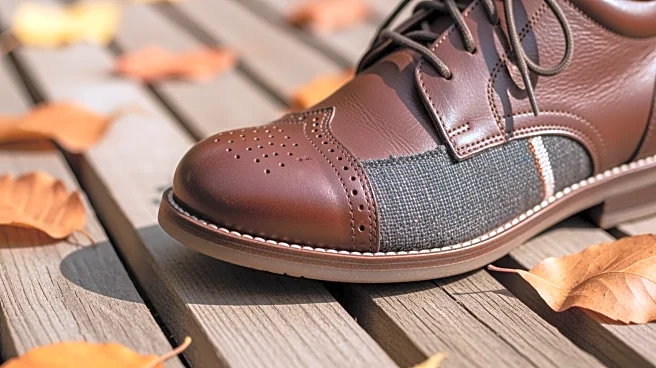
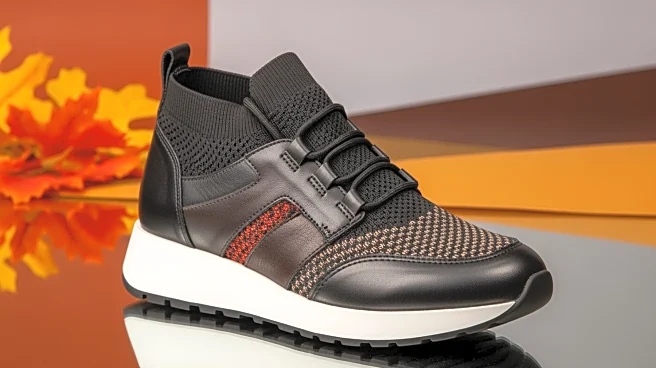
Spain, emphasized the integration of style and comfort, durability, and sensory design. Manuel Román, president of AEC, described the event as a strategic tool for component companies to develop sample collections. The trends focus on combining vintage aesthetics with modern innovation, highlighting the use of stretch fabrics, embossed jacquards, and sock-like constructions for comfort. Additionally, the emphasis on durability includes designs with interchangeable layers and repairable systems, exemplified by Camper's modular Roku shoe. Sensory design is also a central theme, with materials chosen for their tactile and visual appeal.
Why It's Important?
These trends reflect a growing consumer demand for products that balance aesthetics with functionality and sustainability. The focus on comfort and durability addresses the needs of an increasingly discerning market that values long-lasting and adaptable products. The integration of sensory design and reinterpreted nostalgia suggests a shift towards emotionally engaging products that connect with consumers on a deeper level. This approach not only caters to current consumer preferences but also aligns with broader industry movements towards sustainability and innovation. Companies that adopt these trends may gain a competitive edge by offering products that meet both aesthetic and practical demands.
What's Next?
As these trends gain traction, footwear companies are likely to invest in technologies that enhance product adaptability and sustainability. The emphasis on repairable and modular designs could lead to new business models focused on product longevity and customer engagement through repair services. Additionally, the integration of advanced materials and techniques may drive further innovation in the industry, encouraging collaborations between fashion designers and technology developers. Retailers and manufacturers will need to adapt their strategies to incorporate these trends, potentially reshaping supply chains and marketing approaches to highlight the value of sustainable and emotionally resonant products.
Beyond the Headlines
The focus on reinterpreted nostalgia and sensory design may have broader cultural implications, reflecting a societal desire to connect with the past while embracing modernity. This trend could influence other sectors, such as interior design and consumer electronics, where the blend of vintage aesthetics with contemporary functionality is increasingly popular. Furthermore, the emphasis on sustainability and repairability aligns with global efforts to reduce waste and promote circular economies, potentially influencing regulatory policies and consumer expectations across industries.