





What's Happening?
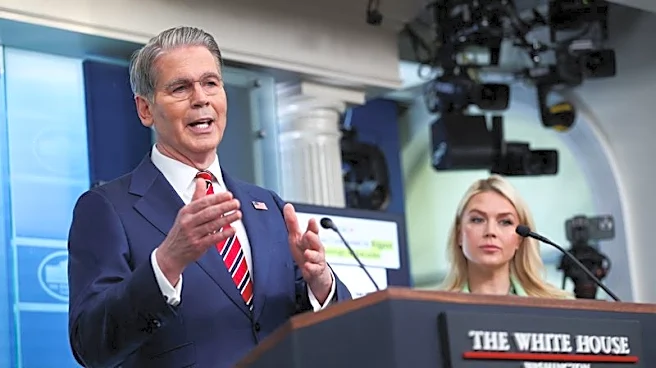
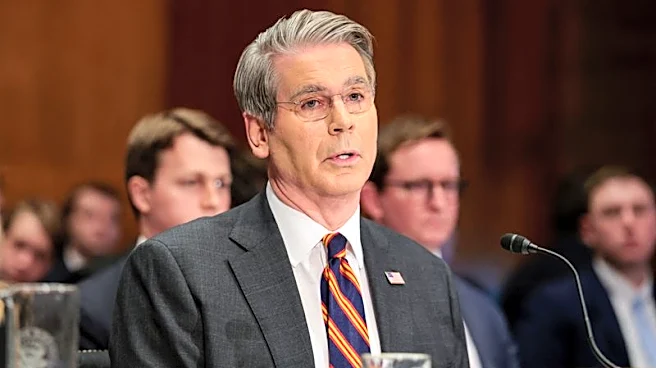
Treasury Secretary Scott Bessent is advocating for U.S. banks to collect citizenship data from customers, a move that aligns with President Trump's broader immigration policy. This initiative, which is nearing implementation through an executive order,
aims to ensure that banks verify the legal status of their clients. Currently, U.S. banks follow 'Know Your Customer' rules to prevent financial crimes, but these do not require citizenship verification. Bessent argues that knowing a customer's citizenship status is crucial for banks to fulfill their regulatory obligations. The proposal has garnered support from some Republicans, including Senator Tom Cotton, who introduced a bill to mandate citizenship verification for bank accounts. However, there are concerns about the economic impact, as restricting access to banking services could increase administrative costs and potentially harm the economy by excluding non-citizens from the financial system.
Why It's Important?
The push for banks to collect citizenship data could have significant implications for the U.S. financial system and economy. By potentially excluding non-citizens, including undocumented immigrants, from accessing banking services, the policy could lead to a rise in the 'unbanked' population, which is often associated with economic disadvantages. This could hinder social mobility and economic growth, as individuals without bank accounts may rely on cash economies, limiting their financial opportunities. Additionally, the American Action Forum estimates that the citizenship verification requirement could impose substantial administrative burdens on banks, costing billions of dollars and requiring millions of paperwork hours. These increased costs could be passed on to consumers, affecting the overall banking experience and financial inclusion.
What's Next?
If the executive order is implemented, banks will need to develop systems to verify the citizenship status of new and existing customers. This could involve significant changes to their current processes and systems, potentially leading to increased operational costs. The banking industry may lobby against the order, citing the economic and administrative burdens. Meanwhile, policymakers and advocacy groups may debate the ethical and legal implications of restricting banking access based on citizenship. The outcome of these discussions could influence future regulatory and legislative actions related to financial services and immigration policy.