




What's Happening?
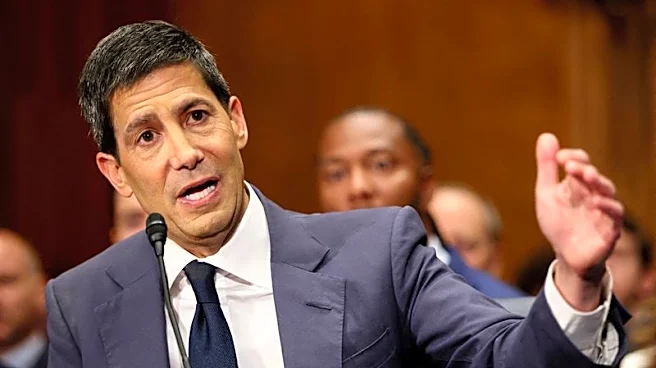
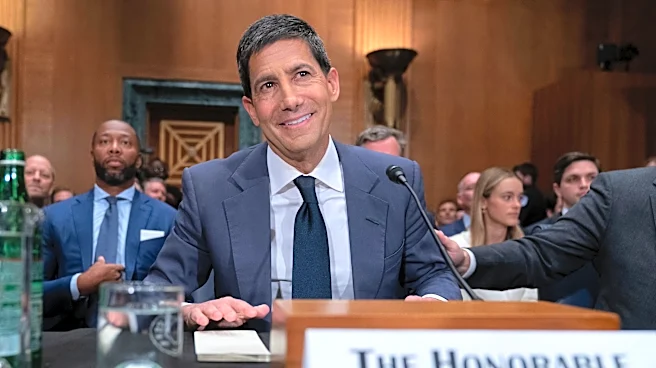
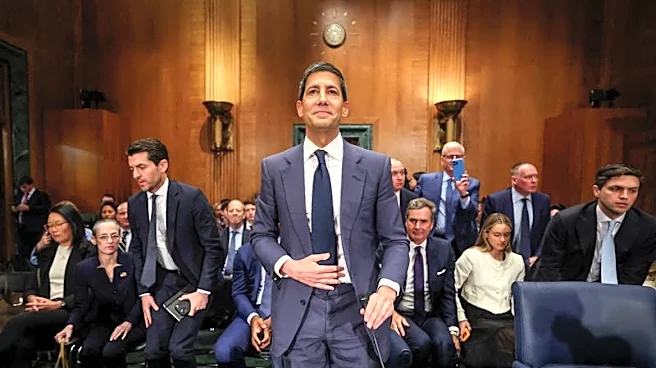
The Senate has confirmed Kevin Warsh as the new chair of the Federal Reserve in a 54-45 vote, marking a significant victory for President Trump. Warsh's confirmation, however, comes with concerns from Trump allies about the potential for interest rate
cuts. Stephen K. Bannon, a former Trump strategist, expressed skepticism about Warsh's ability to cut rates soon, citing recent inflation data. The Labor Department reported a rise in inflation to 3.8% in April, complicating the economic landscape. Warsh, a former Morgan Stanley banker and Fed governor during the 2008 financial crisis, faces a challenging environment with inflation above the Fed's 2% target. His confirmation was not without hurdles, as Sen. Thom Tillis initially blocked the nomination over a Justice Department investigation into Warsh's predecessor, Jerome Powell. Despite the confirmation, Powell will remain on the Fed's board, potentially influencing future decisions.
Why It's Important?
Warsh's confirmation as Fed chair is crucial as it comes at a time of economic uncertainty, with inflationary pressures and geopolitical tensions affecting the U.S. economy. The Fed's decisions on interest rates will have significant implications for economic growth, consumer spending, and financial markets. Warsh's ability to navigate these challenges while maintaining the Fed's independence is critical. The narrow confirmation margin reflects the deepening partisan divides in Washington, which could impact the Fed's credibility and effectiveness. The presence of Powell on the board may also influence the Fed's policy direction, adding another layer of complexity to Warsh's tenure.
What's Next?
Warsh will chair his first policy meeting in June, where decisions on interest rates will be closely watched. The Fed's approach to managing inflation and economic growth will be pivotal in shaping the U.S. economic outlook. Warsh's ability to assert his agenda and maintain independence from the White House will be tested. The ongoing geopolitical tensions, particularly with Iran, and domestic economic indicators will play a significant role in the Fed's policy decisions. Stakeholders, including businesses and financial markets, will be keenly observing the Fed's actions and communications.