



What's Happening?
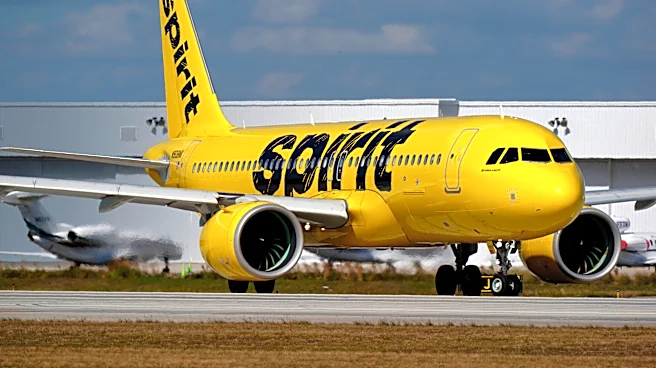
The collapse of Spirit Airlines has resulted in significant disruptions for passengers, many of whom are stranded and forced to pay higher ticket prices on other carriers to return home. This situation has also raised concerns about the financial stability
of other airlines as the summer travel season approaches. The fallout from Spirit Airlines' collapse is causing ripple effects across the airline industry, with other carriers worried about their ability to handle the increased demand and maintain financial stability. The situation is being closely monitored as airlines and passengers navigate the challenges posed by this unexpected development.
Why It's Important?
The collapse of Spirit Airlines is significant as it highlights vulnerabilities within the airline industry, particularly concerning financial stability and capacity management. With passengers stranded and ticket prices rising, there is potential for widespread dissatisfaction and financial strain on consumers. Additionally, other airlines may face operational challenges as they attempt to accommodate displaced passengers, potentially leading to increased costs and logistical issues. This development underscores the importance of financial resilience and strategic planning within the airline sector, especially during peak travel periods.
What's Next?
Airlines are likely to implement contingency plans to manage the increased demand and ensure passenger safety and satisfaction. Regulatory bodies may also step in to assess the situation and provide guidance or support to affected airlines and passengers. The industry will need to address the underlying issues that led to Spirit Airlines' collapse to prevent similar occurrences in the future. Stakeholders, including airline executives, government officials, and consumer advocacy groups, will be closely watching the situation to determine the best course of action moving forward.