

What's Happening?
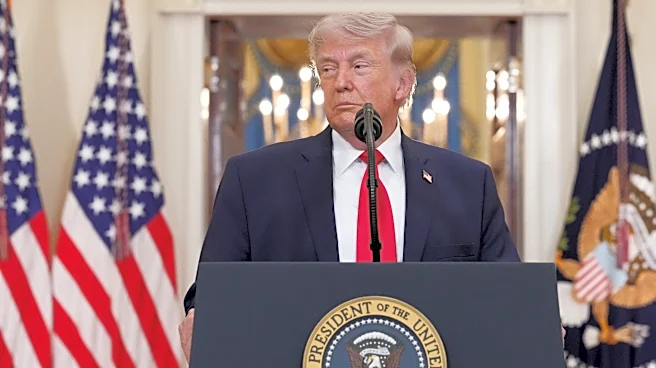
President Donald Trump has issued a new executive order aimed at regulating college sports, particularly focusing on athlete transfer movement, player eligibility, and funding requirements for women and Olympic sports. The order, effective August 1, directs
the NCAA to update its rules to bring stability to the college sports landscape. It includes provisions to limit athlete transfers, cap player eligibility, and prohibit NIL collectives, with compliance linked to federal funding. The order is expected to face legal challenges, as previous executive orders by Trump have been struck down by courts. The SCORE Act, a related legislative effort, has struggled to gain traction in Congress, facing opposition within the Republican party and requiring significant modifications to pass the Senate.
Why It's Important?
The executive order represents a significant intervention in college sports, potentially affecting thousands of athletes and the financial dynamics of college programs. By attempting to regulate athlete movement and compensation, the order could reshape the competitive landscape, impacting recruitment and resource allocation. The focus on women's and Olympic sports highlights concerns about non-revenue programs being defunded. Legal challenges to the order could delay or prevent its implementation, while the ongoing legislative efforts underscore the complexity of achieving consensus on college sports regulation. The outcome could influence the balance between athlete rights and institutional control, with implications for the NCAA's governance and the broader sports industry.
What's Next?
The executive order is likely to face legal scrutiny, with potential court challenges that could affect its enforceability. Meanwhile, Congress continues to debate the SCORE Act, with efforts to bring it to a vote by the end of the month. The bill requires bipartisan support to pass the Senate, posing a significant hurdle. Additionally, presidential committees are meeting to inform congressional legislation, focusing on issues such as antitrust protection, NIL standards, and media rights. These discussions could lead to new legislative proposals, shaping the future of college sports regulation.