




What's Happening?
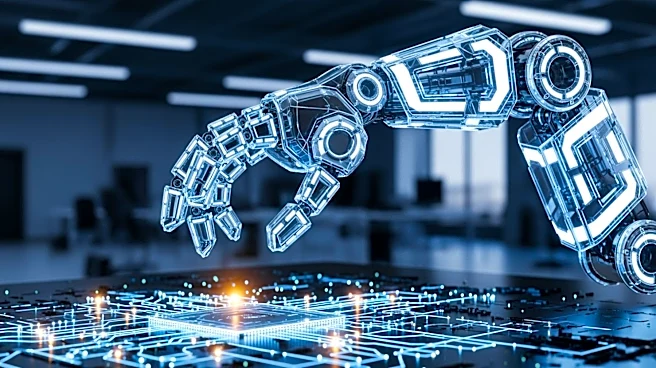
Analog Devices Inc. is advancing the development of humanoid robots capable of operating safely and efficiently alongside humans. The company is focusing on enhancing the robots' environmental awareness through advanced sensor technology. These robots must
manage complex tasks such as movement, balance, and reactivity, which are critical when operating in human-populated environments. The integration of vision and audio sensors is essential for these robots to process real-time data and respond appropriately to their surroundings. Technologies like ADI's Gigabit Multimedia Serial Link (GMSL) and A2B audio bus are being utilized to ensure low-latency data transmission, enabling quick and accurate processing of visual and audio inputs. This development is crucial as labor shortages drive the need for robots in shared spaces to increase efficiency.
Why It's Important?
The integration of humanoid robots into human environments has significant implications for various industries, particularly those facing labor shortages. By enhancing robots' ability to interact safely with humans, businesses can improve operational efficiency and safety. The use of advanced sensor technology ensures that robots can quickly adapt to dynamic environments, reducing the risk of accidents. This development could lead to broader adoption of robots in sectors such as manufacturing, healthcare, and logistics, where human-robot collaboration can enhance productivity. Additionally, the focus on low-latency data processing highlights the importance of real-time decision-making in robotics, which is crucial for maintaining safety standards.
What's Next?
As humanoid robots become more integrated into human environments, further advancements in AI and sensor technology are expected. The industry may see increased collaboration to standardize interfaces and stimulate the ecosystem around humanoid robots. This could lead to the development of more sophisticated robots capable of performing complex tasks with greater autonomy. Additionally, ongoing improvements in battery management and power efficiency will be essential to support the extended operation of these robots. Stakeholders, including technology developers and industry leaders, will likely continue to explore innovative solutions to enhance the capabilities and safety of humanoid robots.
Beyond the Headlines
The deployment of humanoid robots in human environments raises ethical and legal considerations, particularly regarding safety and liability. Ensuring that robots can operate without posing risks to humans is paramount, and this requires robust testing and regulatory oversight. The development of humanoid robots also prompts discussions about the future of work and the potential displacement of human labor. As robots take on more roles traditionally performed by humans, there will be a need to address the social and economic impacts, including job retraining and workforce adaptation.