
What's Happening?
Joby Aviation, a leader in the development of electric vertical takeoff and landing (eVTOL) aircraft, is preparing to launch its commercial service later this year. The company, valued at approximately
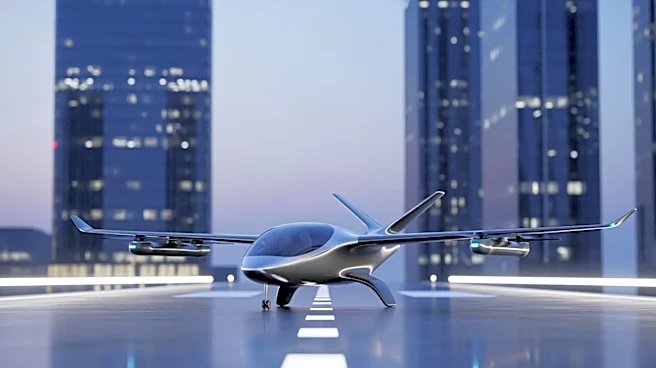
$10 billion, aims to provide a quieter, zero-emission alternative to traditional helicopters. Joby's eVTOL aircraft are designed to transport passengers from airports to city centers in about 10 minutes, offering a potential solution for urban air mobility. Recently, Joby conducted passengerless demonstration flights from JFK to Manhattan to showcase the capabilities of its aircraft. The company is working to overcome certification hurdles to ensure the safety of its electric motors, batteries, and tilting rotors, while also gaining public acceptance for flying taxis.
Why It's Important?
The introduction of Joby's eVTOL aircraft could significantly impact urban transportation by offering a faster and potentially more cost-effective alternative to ground transportation. This development is particularly relevant for cities like New York, where traffic congestion is a major issue. By reducing travel time and emissions, Joby's eVTOLs could contribute to a more sustainable urban environment. The success of this initiative could also pave the way for broader adoption of urban air mobility solutions, influencing public policy and infrastructure development. Additionally, the competitive pricing model, comparable to high-end Uber services, could make aerial commuting more accessible to a wider audience.
What's Next?
As Joby Aviation prepares for the commercial launch of its eVTOL service, the company must navigate regulatory challenges to obtain necessary certifications. This includes proving the safety and reliability of its aircraft components. Public acceptance will also play a crucial role in the success of flying taxis, as potential customers need to be convinced of the safety and practicality of this new mode of transportation. If successful, Joby's eVTOLs could become a common sight in urban areas, potentially leading to changes in city planning and transportation policies to accommodate this new technology.