
What's Happening?
The wedding industry is witnessing a shift towards more intimate and personalized celebrations, as highlighted by recent trends for 2026. Traditional large-scale ceremonies are being replaced by smaller,
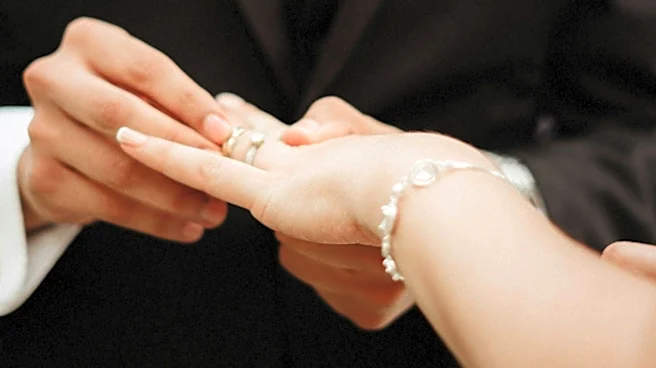
more meaningful gatherings. Couples are opting for private ring exchanges followed by grand parties, focusing on creating impactful moments rather than lengthy formalities. The concept of 'food moments' is gaining traction, with buffets being rebranded as 'food installations' to offer a chic dining experience. In fashion, the vintage bridal market is thriving, with designers drawing inspiration from classic silhouettes to create modern, made-to-order dresses. Additionally, the trend of combining engagement and wedding ring budgets into a single, standout piece is becoming popular, reflecting a move towards individualism in jewelry choices.
Why It's Important?
These evolving wedding trends reflect broader societal shifts towards personalization and authenticity. As couples prioritize meaningful experiences over traditional norms, the wedding industry is adapting to meet these new demands. This shift could lead to changes in how wedding services are marketed and delivered, impacting businesses from event planning to fashion and catering. The emphasis on unique, personalized elements may also influence consumer behavior in other sectors, as individuals seek products and services that align with their personal values and preferences. The trend towards smaller, more intimate weddings could also have economic implications, potentially reducing costs for couples while encouraging innovation and creativity within the industry.
What's Next?
As these trends continue to gain momentum, wedding service providers may need to adapt their offerings to cater to the demand for personalized and intimate celebrations. This could involve developing new products and services that emphasize creativity and individuality. Additionally, as couples increasingly seek unique and meaningful experiences, there may be a rise in demand for bespoke and artisanal products, from custom-designed dresses to handcrafted jewelry. The industry may also see a shift towards more sustainable practices, as couples prioritize ethical and environmentally friendly options in their wedding planning.
Beyond the Headlines
The move towards more personalized weddings could have cultural implications, as it challenges traditional notions of what a wedding should be. This shift may encourage greater acceptance of diverse and non-traditional wedding formats, reflecting broader societal changes towards inclusivity and diversity. Additionally, the emphasis on individualism and personal expression in wedding planning could influence other life events, such as birthdays and anniversaries, leading to a broader cultural shift towards celebrating personal milestones in unique and meaningful ways.