


What's Happening?
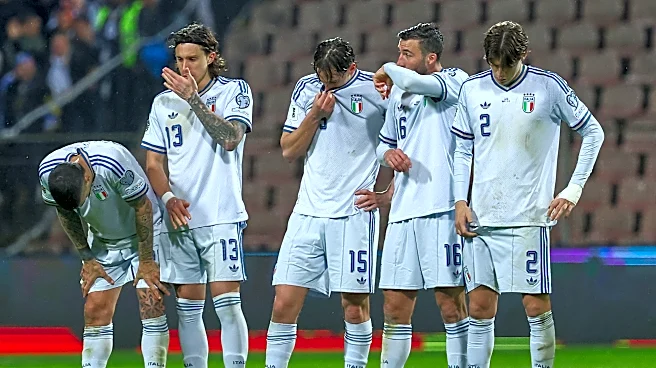
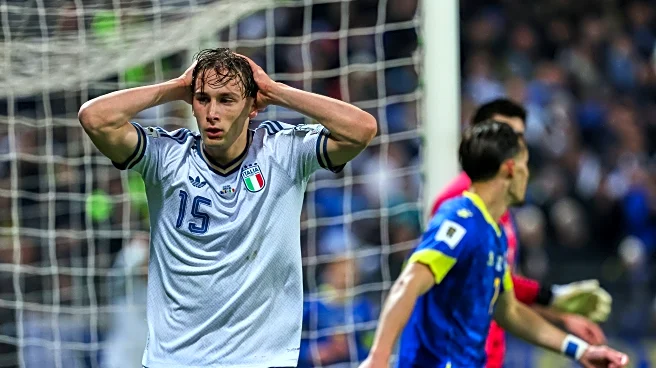
Italy's national soccer team, led by goalkeeper Gianluigi Donnarumma, failed to qualify for the World Cup for the third consecutive time after losing to Bosnia and Herzegovina in a penalty shootout. Donnarumma, who debuted for Italy in 2016, expressed
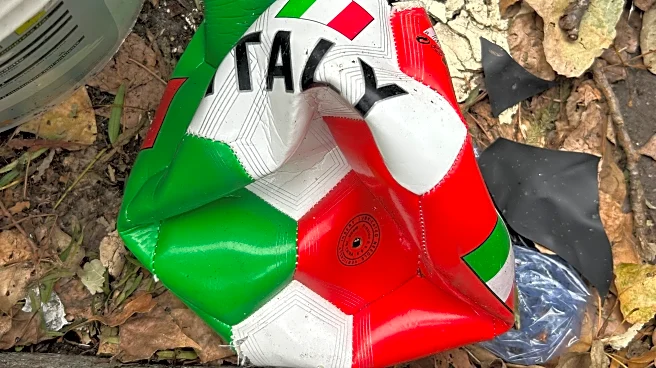
deep disappointment and sadness over the loss, which he shared in an emotional social media post. Despite being one of the world's top goalkeepers, Donnarumma was unable to save any penalties during the match, and Italy's Pio Esposito and Bryan Cristante missed their shots. The defeat has been labeled a 'third apocalypse' by Italian media, highlighting the ongoing struggles of the national team.
Why It's Important?
Italy's repeated failure to qualify for the World Cup is a significant blow to the country's soccer legacy, as they are historically one of the most successful teams in the tournament's history. This ongoing struggle raises questions about the future of Italian soccer and the effectiveness of its current leadership and strategies. The emotional impact on players like Donnarumma underscores the pressure and expectations placed on the team. The failure to qualify also affects Italy's international reputation and could have financial implications for the country's soccer federation and related industries.
What's Next?
In the wake of this defeat, Italy's soccer federation faces pressure to reassess its strategies and leadership. Calls for change may lead to new coaching appointments and a reevaluation of player development programs. The team will need to regroup and focus on future competitions, with an emphasis on rebuilding confidence and performance. Donnarumma and his teammates are likely to be central to these efforts, as they aim to restore Italy's standing in international soccer. The path forward will require resilience and a commitment to addressing the underlying issues that have led to these repeated setbacks.