




What's Happening?
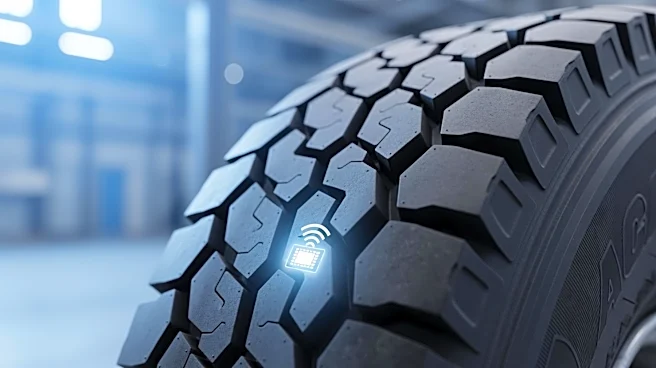
Auburn University's Transportation Research Institute (AUTRI) has received a $1.9 million grant from the Federal Motor Carrier Safety Administration (FMCSA) to investigate the use of radio frequency identification (RFID) technology in truck tires. The
study aims to determine if RFID sensors can detect dangerous tire conditions before they lead to blowouts. This initiative comes in response to data showing that heavy commercial trucks, which make up about 5% of registered vehicles, are involved in 13% of fatal crashes, with tire-related issues contributing to 6% of these incidents. The research will focus on embedding small, battery-free RFID sensors in truck tires to monitor inflation pressure and other conditions. The study will explore three scenarios: measuring tire pressure while parked, capturing data as trucks pass fixed readers, and continuous monitoring during operation.
Why It's Important?
The study's findings could significantly enhance road safety by reducing the number of accidents caused by tire failures. If successful, the technology could be applied beyond the trucking industry to include school buses and passenger vehicles, potentially saving lives and reducing maintenance costs. The research addresses a critical gap in current tire maintenance practices, where human error often leads to underinflated tires. By automating tire condition monitoring, the technology could improve compliance with safety standards and reduce the risk of accidents. However, the cost and implementation of RFID technology remain challenges that need to be addressed.
What's Next?
The study will test the feasibility of RFID technology in real-world conditions, with potential implications for regulatory changes in tire safety standards. If successful, the technology could lead to new industry standards for tire monitoring, influencing manufacturers and fleet operators. The research will also explore the integration of RFID sensors with existing systems, such as smartphone apps, to make the technology more accessible and cost-effective. The outcomes could prompt further investment in similar technologies, driving innovation in vehicle safety.