


What's Happening?
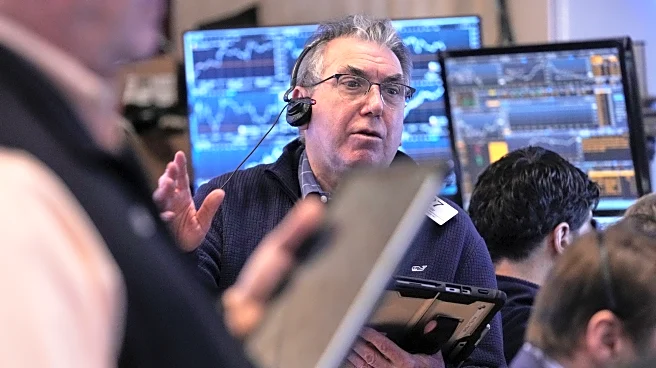
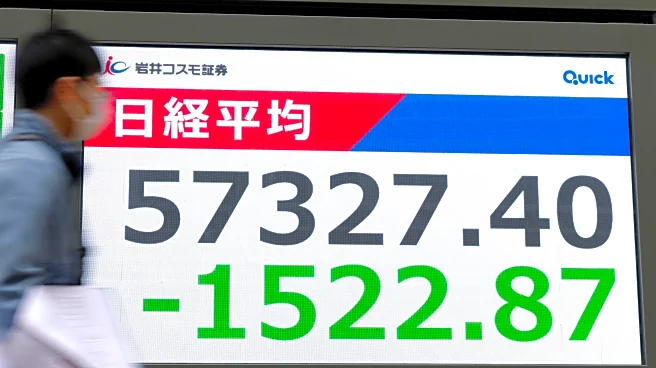
Stock index futures in the U.S. experienced significant declines as investors reacted to escalating tensions in the Middle East, which have raised concerns about inflation and global trade. The conflict has led to threats from Tehran to attack vessels
in the Strait of Hormuz, a critical chokepoint for global oil supply, causing a spike in crude and natural gas prices. This has negatively impacted industries sensitive to oil prices, such as airlines and travel, with companies like Delta and Royal Caribbean seeing a 4% drop in their stock prices. The broader market selloff also affected technology stocks, with Nvidia and Microsoft experiencing declines. The CBOE volatility index, a measure of market fear, reached a three-month high, indicating increased investor anxiety.
Why It's Important?
The current market volatility underscores the interconnectedness of geopolitical events and economic stability. Rising oil prices due to Middle East tensions could exacerbate inflation, complicating monetary policy decisions for the Federal Reserve, which is already dealing with inflationary pressures from tariffs. The situation highlights the vulnerability of global markets to regional conflicts, particularly in areas critical to energy supply. The impact on industries reliant on stable oil prices, such as airlines and travel, could lead to broader economic repercussions if the conflict persists. Additionally, the market's reaction reflects broader concerns about the potential disruption from emerging technologies like AI, adding another layer of uncertainty for investors.
What's Next?
Investors will be closely monitoring upcoming statements from Federal Reserve officials, including John Williams, Jeffrey Schmid, and Neel Kashkari, for insights into future monetary policy. The market is also awaiting further developments in the Middle East, as any escalation could lead to more significant economic disruptions. Companies in the energy sector may continue to see gains if oil prices remain high, while industries sensitive to these prices could face ongoing challenges. The broader market will be looking for stability signals, either through geopolitical resolutions or clear policy directions from central banks.