






What's Happening?
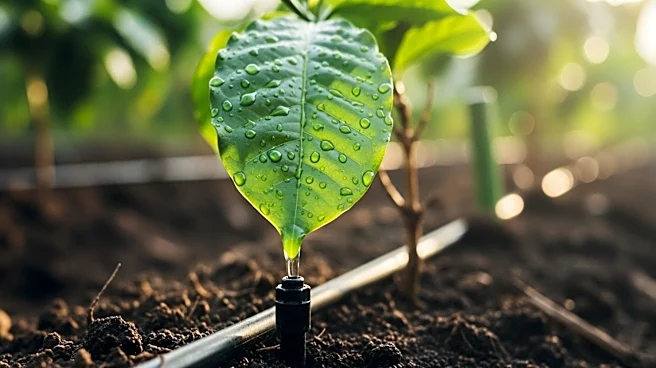
Orbia Netafim has released a Life Cycle Assessment study demonstrating that drip irrigation significantly reduces the environmental impact of coffee cultivation. Conducted in Vietnam, the study found that drip irrigation lowers the Global Warming Potential
(GWP) of coffee farming by reducing water use, energy consumption, and carbon footprint compared to traditional overhead irrigation. The study highlights the benefits of precision irrigation, including higher yields and reduced chemical use, supporting sustainable coffee production. Orbia Netafim's Coffee Protocol, developed over decades, provides agronomically proven best practices for irrigation and fertigation, tailored to specific climate zones and coffee varieties.
Why It's Important?
The findings of this study are significant for the coffee industry, which faces challenges from climate volatility, water scarcity, and rising input costs. Drip irrigation offers a practical solution for coffee growers to enhance productivity while minimizing environmental impact, aligning with growing consumer demand for sustainably sourced coffee. By reducing resource use and carbon footprint, precision irrigation supports supply chain resilience and advances ESG targets for coffee producers. The study reinforces the importance of innovative agricultural practices in achieving long-term sustainability and addressing global environmental challenges.