

What's Happening?
American consumers reduced their spending at the start of 2026, continuing a trend of declining retail sales that began late last year. According to the Commerce Department, retail sales fell by 0.2% in January, following a flat reading in December. This
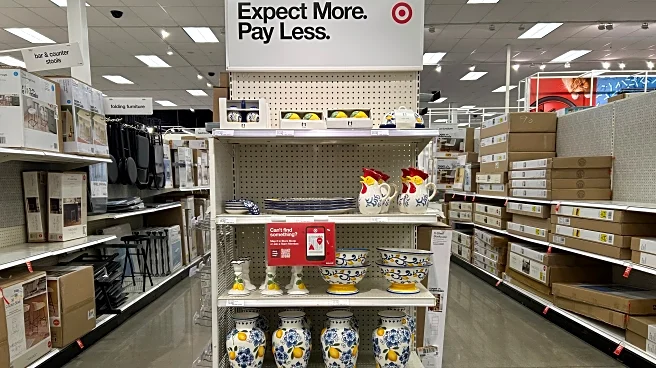
decline was unexpected, as economists had predicted another flat reading. The report's release was delayed due to a 43-day government shutdown. The decrease in sales was primarily driven by a decline in motor vehicle and auto parts dealerships, as well as gas stations, which saw reduced sales due to lower gas prices. However, excluding these categories, sales increased by 0.3%. Severe winter weather also impacted sales, as it hindered shoppers from visiting physical stores, although online retailers experienced a 1.9% increase in sales. Health and personal care stores, clothing stores, and consumer electronics retailers reported declines, while home furnishings and building materials saw gains.
Why It's Important?
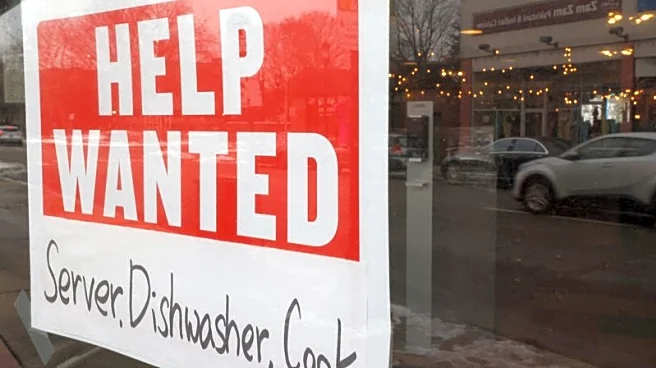
The decline in retail sales is significant as it reflects broader economic challenges and consumer behavior trends. The reduction in spending suggests that consumers are becoming more cautious, possibly due to economic uncertainties such as the ongoing tariff changes and a weak job market. The Supreme Court's decision to strike down major tariffs imposed by President Trump, followed by the introduction of new tariffs, adds to the uncertainty faced by retailers. This environment makes it difficult for businesses to plan hiring and inventory decisions. The job market is also under pressure, with employers cutting 92,000 jobs in February, leading to an increase in the unemployment rate to 4.4%. These factors indicate potential challenges for economic growth and stability, affecting both businesses and consumers.
What's Next?
Retailers and economists will be closely monitoring consumer spending patterns and economic indicators in the coming months. The impact of new tariffs and the evolving job market will be key factors influencing retail performance. Retailers may need to adjust their strategies to address changing consumer preferences and economic conditions. Additionally, policymakers and economic analysts will likely focus on measures to stimulate consumer confidence and spending to support economic recovery. The ongoing geopolitical tensions and their effect on gas prices will also be a critical area of observation, as they can further influence consumer spending and economic dynamics.