


What's Happening?
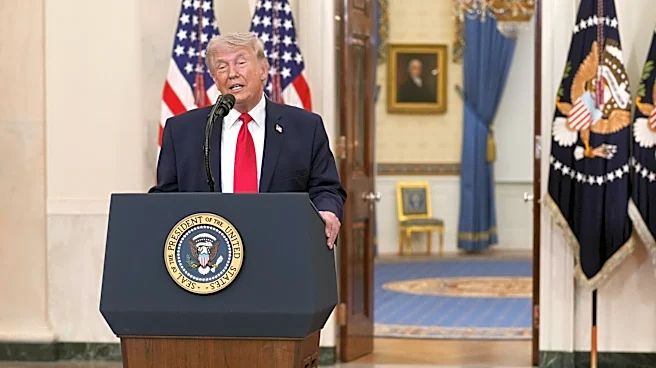
In a recent address, President Trump announced that the United States would intensify its military actions against Iran, claiming that military objectives were nearly achieved and suggesting the conflict might soon conclude. This announcement has led
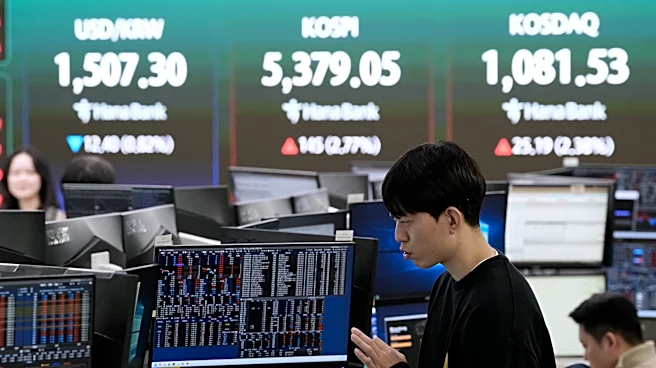
to significant market reactions, with stocks declining and oil prices surging. The speech failed to provide clarity on the timeline for the conflict's resolution, which has left investors uncertain. The U.S. dollar strengthened as a safe haven, while global stocks, particularly in Asia, experienced declines. The price of Brent crude oil rose by about 5% due to concerns over the Strait of Hormuz, a critical oil shipping route, remaining closed amid the conflict.
Why It's Important?
The escalation of military actions in Iran and the lack of a clear resolution timeline have heightened market volatility, impacting global economic stability. The surge in oil prices could exacerbate inflationary pressures, affecting consumer prices and economic growth. The strengthening of the U.S. dollar reflects investor anxiety and a shift towards safer assets, which could have implications for international trade and currency markets. The ongoing conflict and its impact on oil supply routes like the Strait of Hormuz are critical, as they influence global energy markets and economic conditions, particularly in Asia, which relies heavily on oil imports.
What's Next?
The continuation of military actions in Iran suggests that market volatility may persist, with potential further impacts on global stock markets and oil prices. Investors and policymakers will be closely monitoring developments for any signs of de-escalation or resolution. The reopening of the Strait of Hormuz is a key factor that could stabilize oil prices and ease supply concerns. Additionally, the U.S. administration's future statements and actions will be pivotal in shaping market expectations and economic conditions.